
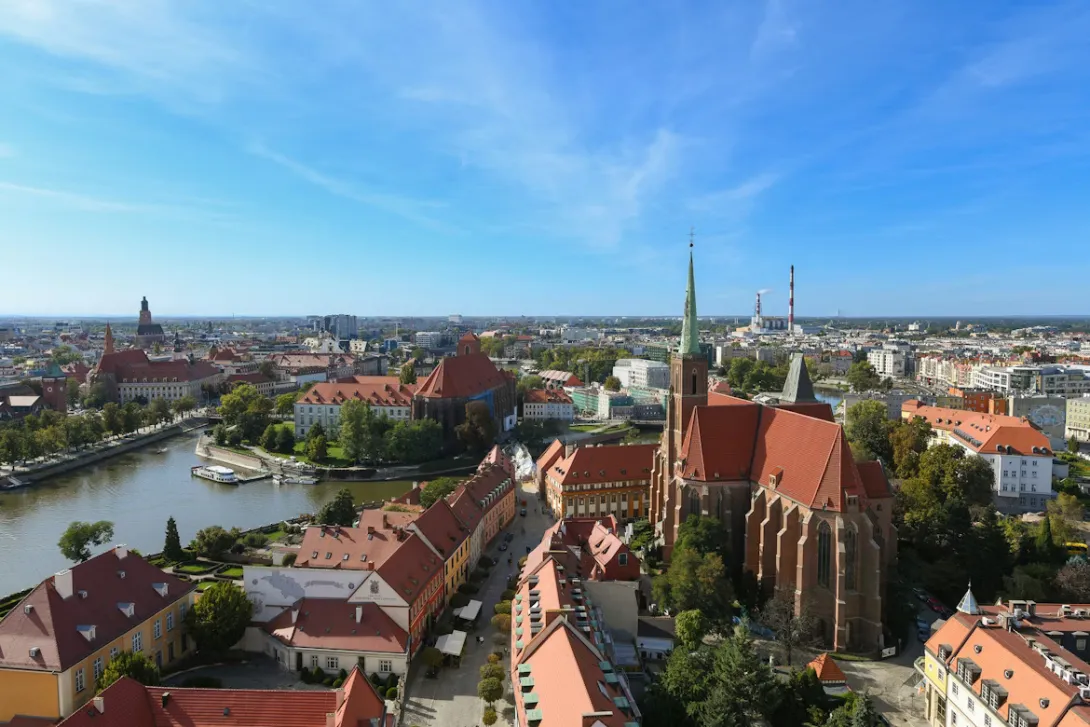
The Amber Road Connection
The route from Wroclaw to Tallinn follows part of the ancient Amber Road, a trade network that connected the Baltic Sea to the Mediterranean. This 1,200-kilometer drive crosses four countries—Poland, Lithuania, Latvia, and Estonia—with road surfaces that shift from Poland's well-maintained A1 and S7 highways to Latvia's narrower, forest-lined A2. The journey requires navigating Poland's toll system via viaTOLL, Lithuania's vignette system, and Estonia's lack of road tolls for passenger cars. Drivers should prepare for Poland's frequent roadside police checks, Lithuania's strict 50km/h urban speed limits, and Estonia's right-of-way rules at unmarked intersections.
A Three-Day Driving Schedule
This Wroclaw to Tallinn itinerary 3 days balances driving with exploration.
Day 1: Depart Wroclaw 8 AM via A1, reaching Toruń by 10:30 AM. Spend 2 hours in the Old Town before continuing to Warsaw (3 hours via S7). Overnight in Warsaw after visiting the POLIN Museum of Polish Jews (open until 6 PM, closed Tuesdays).
Day 2: Leave Warsaw 7 AM via A2, crossing into Lithuania at Kalvarija border (allow 30-60 minutes). Reach Kaunas by 1 PM, visiting the Ninth Fort (open until 5 PM). Drive 2 hours to Riga, arriving by 7 PM for overnight.
Day 3: Depart Riga 8 AM via A1, stopping at Sigulda's Gutmanis Cave (1 hour) before crossing into Estonia. Visit Lahemaa National Park's Palmse Manor (open 10 AM-6 PM) before the final hour to Tallinn, arriving by 6 PM. This schedule provides 6-7 hours driving daily with substantive stops.
Recommended Route Stops
When considering things to do between Wroclaw and Tallinn, Toruń makes a logical first stop at 200km from Wroclaw. The medieval Old Town, a UNESCO site, contains the 13th-century Town Hall and Copernicus' birthplace at Copernicus Street 15/17. Warsaw's Łazienki Park covers 76 hectares with the Palace on the Water and Chopin concerts Sundays at noon May-September. Kaunas offers the Ninth Fort Museum at Žemaičių pl. 73, documenting Soviet and Nazi occupations. Between Kaunas and Riga, the Hill of Crosses near Šiauliai contains over 100,000 crosses on a 2-hectare site. Riga's Central Market in former Zeppelin hangars sells local smoked fish and amber. In Estonia before Tallinn, Lahemaa National Park's Viru Bog boardwalk provides 3.5km of accessible bog landscape.
Route Logistics and Practical Details
| Segment | Distance | Time | Main Roads | Border Crossings |
|---|---|---|---|---|
| Wroclaw to Warsaw | 350km | 4h | A1, S8 | None |
| Warsaw to Kaunas | 390km | 5h | A2, E67 | Poland-Lithuania |
| Kaunas to Riga | 270km | 3.5h | A5, A6 | Lithuania-Latvia |
| Riga to Tallinn | 310km | 4h | A1, E67 | Latvia-Estonia |
| Total: 1,200km, 16-18 hours driving time excluding stops. Winter driving (Nov-Mar) adds 30-50% time due to snow/ice. | ||||
Required documents: valid driver's license, vehicle registration, insurance Green Card. Poland uses viaTOLL for vehicles over 3.5t; Lithuania requires e-vignette for vehicles up to 3.5t (€8/10 days); Latvia and Estonia have no tolls for cars. Fuel costs average €1.45/L in Poland, €1.50/L in Lithuania, €1.55/L in Latvia, €1.60/L in Estonia. For planning assistance, consider how to find the best stops and hidden gems between cities.
Continue Your Adventure
Frequently Asked Questions
How long to drive Wroclaw to Tallinn?
The direct drive covers approximately 1,200 kilometers and requires 16-18 hours of pure driving time without stops. With overnight breaks and sightseeing, most travelers complete the journey in 2-4 days.
Is it worth driving Wroclaw to Tallinn?
Driving allows access to intermediate locations like Toruń's medieval center, Kaunas' interwar architecture, and Riga's market halls that flights bypass. The road infrastructure is generally good, though winter conditions from November through March require careful planning and winter tires.
What are the best stops Wroclaw to Tallinn?
Key stops include Toruń (medieval architecture), Warsaw (Łazienki Park), Kaunas (Ninth Fort Museum), the Hill of Crosses near Šiauliai, Riga (Central Market), and Lahemaa National Park in Estonia. Each offers distinct cultural or historical elements within reasonable driving distances.