
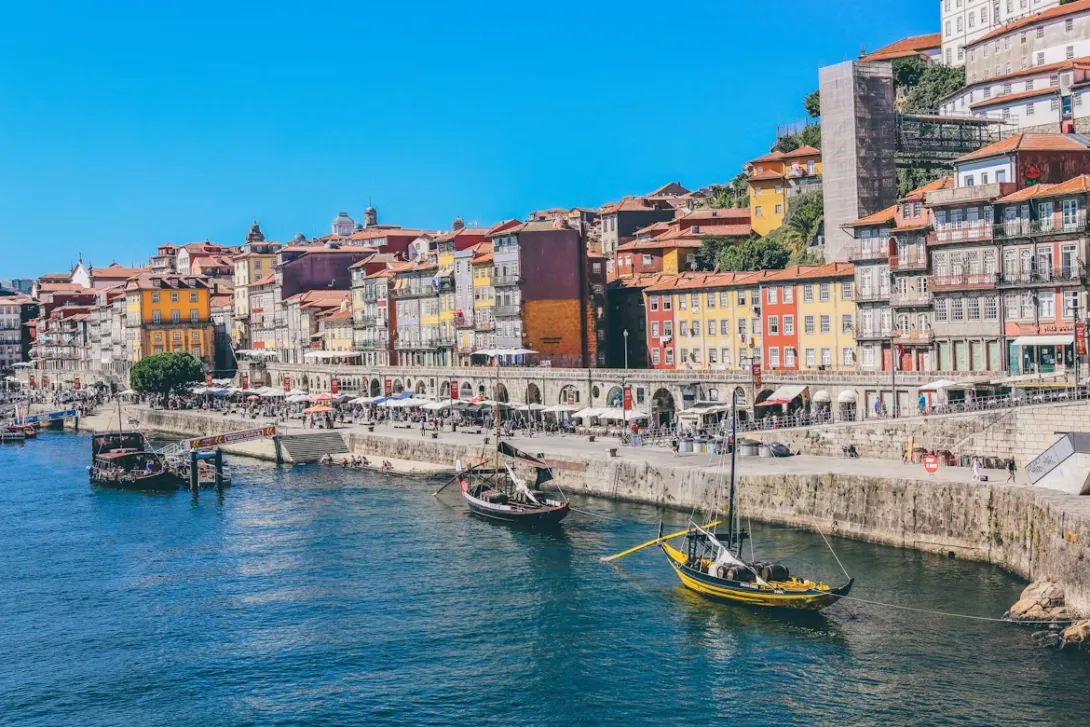
Introduction: The Iberian Corridor
The road from Porto to Seville follows ancient trade routes that connected Atlantic ports with southern Iberia, with Roman milestones still visible near Évora. Modern drivers on the A6 highway cross the Guadiana River at the exact point where Portugal's Alentejo region meets Spain's Andalusia, marked by a 660-meter bridge completed in 1991. This 540-kilometer route transitions from Porto's granite architecture to Seville's Moorish influences, with temperature differences of up to 8°C between northern Portugal and southern Spain during summer months. The drive requires navigating Portugal's IP3 and Spain's A-66 highways, with toll costs averaging €25-35 depending on vehicle class. For those planning this journey, understanding how to find the best stops and hidden gems between cities can transform a simple drive into a memorable exploration of Iberian contrasts.
Route Logistics and Practical Details
| Segment | Highway | Distance | Driving Time | Key Features |
|---|---|---|---|---|
| Porto to Coimbra | IP3/A1 | 120 km | 1h 15m | Toll section begins after Aveiro |
| Coimbra to Castelo Branco | IP3/A23 | 150 km | 1h 40m | Mountainous terrain, limited services |
| Castelo Branco to Badajoz | A6/IP7 | 160 km | 1h 50m | Border crossing, Guadiana River bridge |
| Badajoz to Seville | A-66 | 200 km | 2h 10m | Andalusian plains, minimal curves |
The total driving time from Porto to Seville without stops is approximately 6 hours 55 minutes, though most travelers complete it in 7-8 hours with brief pauses. Portugal's Via Verde electronic toll system works on all major highways, while Spain's A-66 is toll-free. Fuel stations are spaced every 40-60 kilometers, with prices typically 10-15% lower in Spain. Border formalities are minimal for EU citizens, though documentation checks can occur. The route passes through three distinct climate zones: Porto's maritime influence gives way to continental conditions near Castelo Branco, transitioning to Mediterranean warmth approaching Seville.
Essential Places to Visit En Route
Coimbra, 120 kilometers south of Porto, merits a stop for its 13th-century university library where 300,000 volumes include medical texts from 1500. The IP3 highway exit for Conímbriga leads to Roman ruins with intact mosaic floors depicting mythological scenes. At kilometer 245, the fortified town of Marvão perches 860 meters above sea level, accessible via a 12-kilometer detour from Portalegre. Évora's Roman Temple columns, erected around the 1st century AD, stand adjacent to a 16th-century cathedral containing an altar carved from single marble block. Mérida, just off the A-66 at kilometer 385, preserves a Roman theater that still hosts classical performances each summer. These locations represent some of the best stops Porto to Seville, offering historical depth without requiring lengthy detours.
Practical considerations for things to do between Porto and Seville include timing visits to avoid midday heat in southern sections and noting that many smaller towns observe siesta closures from 2-5 PM. The Alqueva Dam region, accessible via EX-105 from Badajoz, provides reservoir views and stargazing opportunities due to minimal light pollution. Food specialties change noticeably along the route: Porto's francesinha sandwiches give way to Coimbra's chanfana stew, then to Alentejo's açorda bread soups, finally reaching Seville's salmorejo. Each culinary tradition reflects local agricultural patterns visible from the highway.
A Practical Three-Day Travel Plan
This Porto to Seville itinerary 3 days balances driving with exploration.
Day 1 begins in Porto with departure at 8 AM, reaching Coimbra by 9:30 AM for a two-hour university tour. Continue south on IP3 to Castelo Branco (arrival 1:30 PM) for lunch at Restaurante O Alpendre known for river fish dishes. Drive 90 minutes to Évora, checking into Pousada dos Lóios by 5 PM to visit the Chapel of Bones before dinner.
Day 2 starts with Évora's cathedral at 9 AM, departing at 11 AM for the 75-minute drive to Badajoz's Alcazaba fortress. Cross into Spain by 1:30 PM, stopping at Mérida's Roman theater (open until 6:30 PM). Continue 45 minutes to Zafra for overnight at Parador de Zafra, a 15th-century castle.
Day 3 allows a morning visit to Zafra's Plaza Grande before the final 90-minute drive to Seville. Arrive by noon for early check-in at hotels near the Santa Cruz quarter. This schedule maintains driving segments under three hours while maximizing daylight exploration. The question of is it worth driving Porto to Seville receives affirmative answer through this structured approach that reveals regional transitions impossible to experience by air. Total mileage reaches 620 kilometers with approximately 10 hours of actual driving time across three days.
Continue Your Adventure
Frequently Asked Questions
How long to drive Porto to Seville without stops?
The direct driving time is 6 hours 55 minutes covering 540 kilometers via IP3/A1, A23, A6, and A-66 highways. This assumes compliance with speed limits (120 km/h on Portuguese highways, 120 km/h on Spanish autovías) and includes brief border formalities.
What are the main highway costs?
Portuguese tolls total €18-28 for passenger vehicles on IP3/A1 and A6 segments. Spain's A-66 has no tolls. Fuel costs average €65-85 each way for standard cars. The Via Verde transponder (available at border stations) reduces Portuguese toll plaza delays.
When is the best driving season?
April-June and September-October offer mild temperatures (18-25°C) and minimal rainfall. July-August brings extreme heat (often exceeding 35°C in Andalusia) requiring increased hydration stops. Winter months see possible fog in mountainous sections near Castelo Branco.
Are rental cars allowed across borders?
Most rental companies permit Portugal-Spain crossings with standard insurance, but require notification. Additional fees (€25-50) may apply. Documentation must include rental agreement, driver's license, passport, and Green Card proof of insurance.