
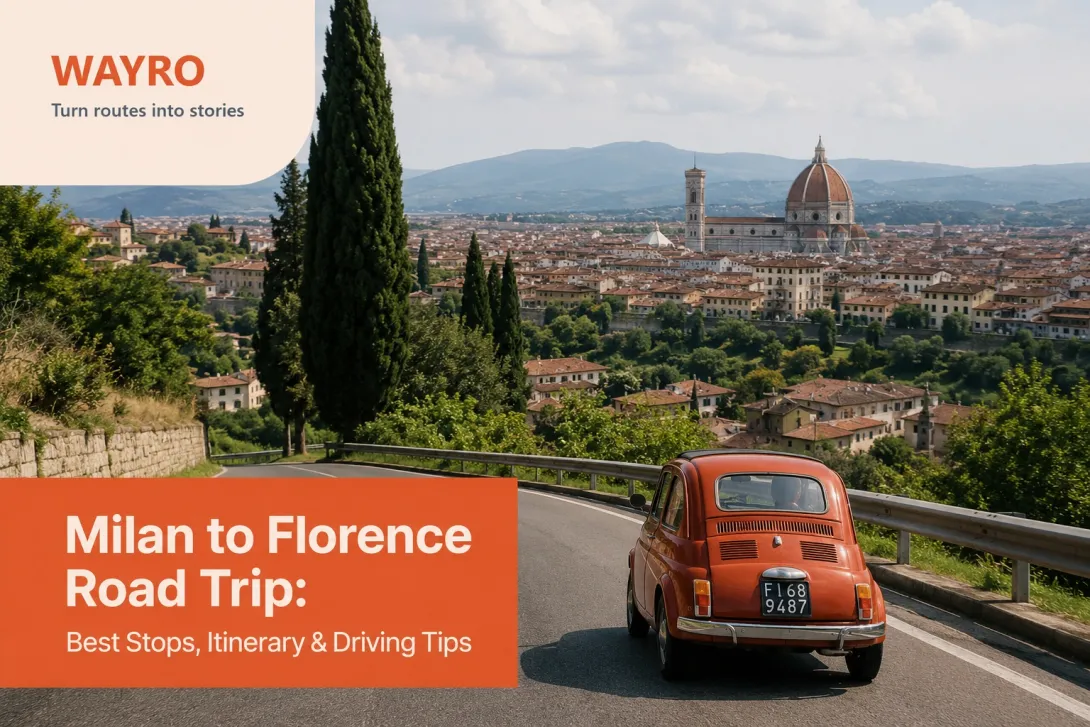
Your Ultimate Milan to Florence Road Trip Adventure
Driving from Milan to Florence offers one of Italy's most rewarding road trip experiences, transforming what could be a simple highway journey into an exploration of Renaissance art, medieval architecture, culinary traditions, and breathtaking landscapes. While the direct route covers approximately 300 kilometers, the real magic happens when you venture beyond the Autostrada del Sole to discover the cultural and geographical treasures of northern and central Italy. This journey connects Italy's financial capital with its artistic heartland, passing through regions that have shaped Italian history, cuisine, and culture for centuries. Whether you're interested in world-class museums, vineyard tours, or picturesque hill towns, this route delivers diverse experiences that showcase Italy beyond its most famous cities.
Route Planning and Practical Information
| Route Option | Distance | Driving Time (Direct) | Primary Highway |
|---|---|---|---|
| Direct Route | 300 km | 3.5-4 hours | A1 (Autostrada del Sole) |
| Scenic Route | 350-400 km | 6-8 hours | Combination of highways and secondary roads |
The most efficient route follows the A1 motorway (Autostrada del Sole), Italy's main north-south artery connecting Milan to Naples. This toll road offers excellent infrastructure with regular service stations, rest areas, and clear signage. Tolls typically cost €20-25 for the entire journey. For those seeking a more scenic experience, consider exiting the A1 at various points to explore secondary roads through the Tuscan countryside or Emilia-Romagna's rolling hills.
Spring (April-June) and autumn (September-October) offer ideal driving conditions with moderate temperatures and fewer tourists. Winter driving requires caution, especially through the Apennine mountain passes where snow and ice can occur. Remember that Italian drivers can be assertive, so maintain awareness and use the right lane unless overtaking. For comprehensive guidance on planning detours and discovering lesser-known attractions, refer to our article on how to find the best stops and hidden gems between cities.
Essential Detours and Regional Highlights
Between Milan and Florence, numerous destinations warrant exploration beyond the highway.
Parma, approximately 120 kilometers southeast of Milan, offers culinary excellence with its namesake ham and cheese, along with Romanesque architecture at the Cathedral and Baptistery.
Bologna, another 100 kilometers further, presents medieval towers, Europe's oldest university, and exceptional pasta dishes like tagliatelle al ragù.
Modena, just north of Bologna, features the Enzo Ferrari Museum and traditional balsamic vinegar producers.
For automotive enthusiasts, Maranello's Ferrari Museum sits conveniently near the route. As you enter Tuscany, consider diverting to medieval San Gimignano with its iconic towers or the Chianti region's vineyards. Each stop provides distinct cultural and gastronomic experiences that enrich the journey. The route also passes near Prato, Italy's textile capital with Renaissance art, and Montecatini Terme, known for its thermal baths and Liberty-style architecture.
3-Day Exploration Plan
Day 1
Depart Milan early, driving southeast to Parma (1.5 hours). Spend the morning exploring the Cathedral, Baptistery, and Palazzo della Pilotta. Enjoy lunch featuring local specialties like culatello and Parmigiano Reggiano. Continue to Modena (45 minutes) for afternoon visits to the Enzo Ferrari Museum and Modena Cathedral. Overnight in Modena or nearby Bologna.
Day 2
Drive to Bologna (30 minutes) for a full day exploring Piazza Maggiore, the Two Towers, Archiginnasio, and Santo Stefano basilica complex. Sample traditional dishes at the Quadrilatero market area. Consider a short drive to Maranello (30 minutes) if interested in Ferrari history. Overnight in Bologna.
Day 3
Depart for Florence via the A1 (1.5 hours direct), but consider exiting at Incisa Valdarno to explore the Chianti region. Visit a vineyard for wine tasting and lunch before continuing to Florence. Arrive in Florence by mid-afternoon to begin exploring the Duomo, Ponte Vecchio, and Uffizi Gallery. This itinerary balances driving time with substantial exploration at key destinations.
Continue Your Adventure
- Munich to Salzburg Road Trip: 5 Best Stops & Scenic Alpine Route
- Ljubljana to Trieste: How to Plan an Interesting Journey With the Best Stops
- Porto to Salamanca Road Trip: A Scenic Route with the Best Stops and Hidden Gems
- A Driver’s Guide from Bilbao to San Sebastian
- Antwerp to Rotterdam Road Trip: The Industrial & Delta Route
Frequently Asked Questions
How long does it take to drive from Milan to Florence?
The direct drive via the A1 motorway takes approximately 3.5 to 4 hours without stops, covering about 300 kilometers. With moderate traffic and standard breaks, plan for 4-5 hours. If exploring destinations along the route, the journey can extend to 6-8 hours or be spread across multiple days.
Is driving from Milan to Florence worthwhile compared to taking the train?
Driving offers advantages for travelers seeking flexibility to explore intermediate destinations like Parma, Bologna, Modena, and Tuscan hill towns at their own pace. The train (2 hours) is faster for direct travel but limits access to rural areas and smaller towns. Driving allows spontaneous detours, luggage convenience, and access to accommodations outside city centers.
What are the best stops between Milan and Florence?
Key stops include Parma for architecture and cuisine, Bologna for medieval history and food culture, Modena for automotive heritage and balsamic vinegar, and the Chianti region for vineyards and landscapes. Secondary options include Piacenza's palaces, Reggio Emilia's museums, Prato's textiles, and San Gimignano's towers.
Can I complete a Milan to Florence road trip in 3 days?
Yes, a 3-day itinerary allows substantial exploration. Day 1: Milan to Parma/Modena. Day 2: Modena to Bologna with possible Ferrari Museum visit. Day 3: Bologna to Florence via Chianti. This provides 1-2 major stops per day with reasonable driving distances (1-2 hours between locations).
What should I see and do between Milan and Florence?
Activities include visiting UNESCO World Heritage sites in Modena and Bologna, tasting Parmigiano Reggiano and prosciutto in Parma, touring Ferrari museums in Maranello and Modena, wine tasting in Chianti, exploring medieval towers in San Gimignano, and experiencing thermal baths in Montecatini Terme. Each region offers distinct culinary specialties and architectural highlights.