
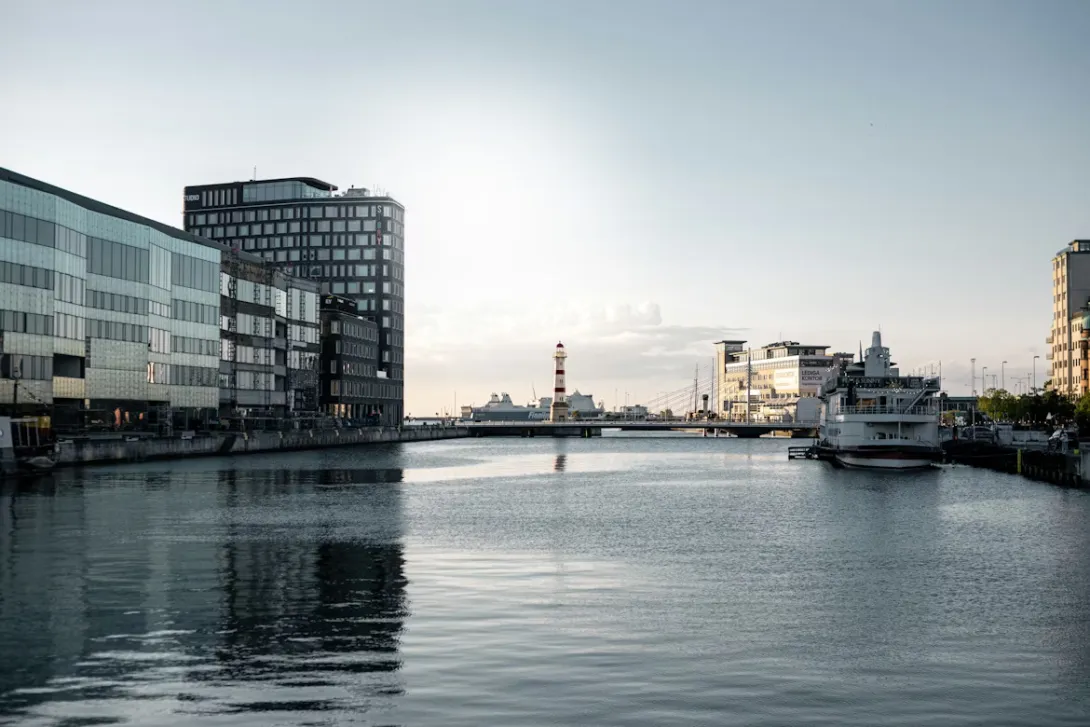
Crossing the Øresund Bridge: A Modern Engineering Marvel
The 16-kilometer Øresund Bridge, opened in 2000, connects Sweden to Denmark via a combination of bridge, artificial island, and tunnel. This structure fundamentally altered travel between Scandinavia and continental Europe, making a road trip from Malmo to Paris a practical reality. The bridge carries the E20 motorway and includes a railway line beneath the roadway. Driving across this expanse of steel and concrete suspended over the Øresund Strait provides a tangible sense of transition from Scandinavian to European landscapes. The toll for passenger vehicles is approximately 55 euros, payable electronically or at designated stations. From the bridge's midpoint, you can see both the Swedish coastline receding and the Danish island of Amager approaching. This crossing marks the beginning of a 1,200-kilometer journey through four countries, each with distinct driving customs and road systems. For those planning similar routes, understanding how to find the best stops and hidden gems between cities can transform a simple drive into a memorable experience.
A Three-Day Driving Schedule
For those planning a Malmo to Paris itinerary 3 days allows sufficient time for both driving and exploration.
Day 1: Depart Malmo at 8:00 AM, cross the Øresund Bridge (40 minutes), and spend 3 hours in Copenhagen visiting Rosenborg Castle and the Round Tower. Drive to Hamburg (4 hours), arriving by 5:00 PM. Overnight in Hamburg.
Day 2: Leave Hamburg at 9:00 AM after visiting Speicherstadt. Drive to Brussels (6 hours), arriving by 4:00 PM. Explore the Grand-Place and nearby galleries. Overnight in Brussels.
Day 3: Depart Brussels at 10:00 AM, allowing time for morning visits to the Atomium or Royal Museums of Fine Arts. Drive to Paris (3.5 hours via E19), arriving by 3:00 PM. This schedule provides approximately 15 hours of total driving time spread across three days, with 4-6 hours of exploration in each major city. Alternative routes include taking the Puttgarden-Rødby ferry instead of the Great Belt Bridge, adding 45 minutes but providing sea views. Accommodation options range from Hamburg's historic hotels near the Alster lakes to Brussels' art nouveau buildings converted to guesthouses.
Recommended Intermediary Destinations
When considering things to do between Malmo and Paris, several cities merit attention. Copenhagen, immediately after crossing the Øresund Bridge, offers Rosenborg Castle (housing the Danish crown jewels) and the 17th-century Round Tower observatory. The city's compact center allows for efficient exploration in 2-3 hours. Continuing south, Hamburg presents the Speicherstadt warehouse district, a UNESCO World Heritage site built on oak piles, and the modern Elbphilharmonie concert hall with its distinctive glass facade. Driving time from Copenhagen to Hamburg is approximately 4 hours via the E47 and E45. Brussels, roughly 6 hours from Hamburg via the A1 and E37, features the Grand-Place's guildhalls with gold-leaf decorations and the Atomium's interconnected spheres representing iron crystal structure. Each city provides distinct architectural styles and local specialties: Danish smørrebrød in Copenhagen, Fischbrötchen in Hamburg, and Belgian waffles in Brussels. Road conditions vary significantly—German autobahns often have no speed limits but frequent construction zones, while Belgian motorways feature consistent lighting and regular service areas.
Route Logistics and Practical Information
| Segment | Route | Distance | Driving Time | Key Roads |
|---|---|---|---|---|
| Malmo to Copenhagen | Sweden to Denmark | 35 km | 40 minutes | E20, Øresund Bridge |
| Copenhagen to Hamburg | Denmark to Germany | 360 km | 4 hours | E47, E45 |
| Hamburg to Brussels | Germany to Belgium | 580 km | 6 hours | A1, E37 |
| Brussels to Paris | Belgium to France | 310 km | 3.5 hours | E19, A1 |
| Total Distance: Approximately 1,285 km Total Driving Time: Approximately 14 hours (without stops) Border Crossings: Sweden-Denmark (Øresund Bridge), Denmark-Germany (Puttgarden-Rødby ferry or bridge), Germany-Belgium (Aachen area), Belgium-France (no formal border control) Tolls: Øresund Bridge (55€), German autobahn (free), French autoroutes (approx. 45€ total) Required Documents: Valid driver's license, vehicle registration, insurance (Green Card recommended), passport or national ID card | ||||
Continue Your Adventure
Frequently Asked Questions
How long to drive Malmo to Paris without stops?
The direct driving time from Malmo to Paris is approximately 14 hours, covering 1,285 kilometers via the E20, E47, A1, and E19 highways. This assumes optimal traffic conditions and includes the Øresund Bridge crossing and potential ferry transit between Denmark and Germany.
Is it worth driving Malmo to Paris versus flying?
Driving offers advantages over flying when you want to visit multiple cities en route, transport more luggage, or experience changing landscapes. The road trip allows stops in Copenhagen, Hamburg, and Brussels, which would require separate flights or trains. Cost comparison: driving expenses (fuel, tolls, potential ferry) total approximately 250-300€ for a standard vehicle, versus 150-400€ for flights plus airport transfers.
What are the best stops Malmo to Paris for short breaks?
For brief pauses, consider these service areas and towns: Køge (Denmark) has a well-preserved medieval center 40 minutes from Copenhagen. Raststätte Heidenau (Germany) on the A1 offers forest views and walking paths. Mons (Belgium) provides a 12th-century belfry and central square 70 kilometers from Brussels. These locations require 30-60 minute stops rather than extended visits.
What should I know about driving regulations on this route?
Sweden and Denmark require daytime running lights. Germany has no general speed limit on autobahns but recommends 130 km/h. Belgium mandates priority to the right in unmarked intersections. France requires breathalyzer kits in vehicles (though penalty was suspended). All countries enforce strict drink-driving limits (0.05% or lower). Toll systems vary: Denmark's BridgePass, France's Liber-t electronic tag, Belgium's vignette for trucks only.