
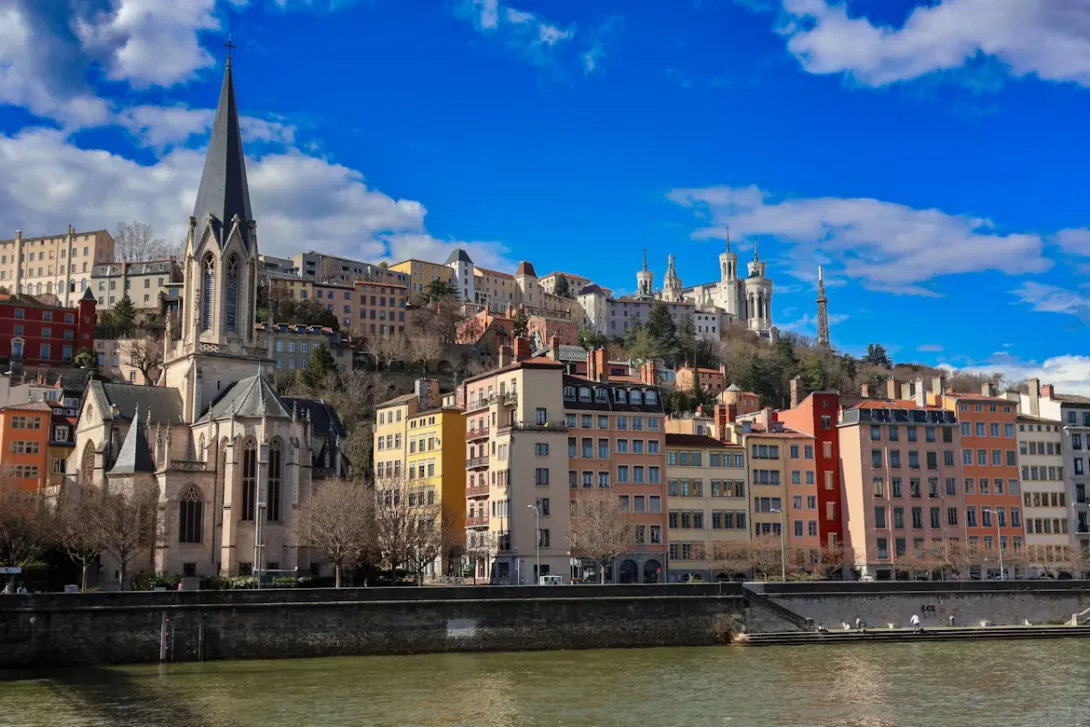
Introduction: The Lyon–Chamonix Corridor
The route from Lyon to Chamonix covers roughly 220 kilometers (137 miles) along the A43 and A40 motorways, commonly called the Autoroute Blanche.
A historical fact: the Mont Blanc Tunnel, opened in 1965, connects Chamonix to Courmayeur, Italy. The A40 ends at the tunnel's entrance, making Chamonix the last French town before Italy.
Driving time is typically 2.5 to 3 hours without stops, but with attractions along the way, many travelers wonder how long to drive Lyon to Chamonix with breaks. The answer: plan for 4-5 hours if you explore.
For tips on finding hidden gems, see how to find the best stops and hidden gems between cities.
| Segment | Distance | Time | Highway |
|---|---|---|---|
| Lyon to Chambéry | 100 km | 1 h | A43 |
| Chambéry to Montmélian | 20 km | 15 min | A43 |
| Montmélian to Annecy | 50 km | 35 min | A41 |
| Annecy to Chamonix | 80 km | 1 h 15 min | A40 |
Road Safety, Family Stops, and Fatigue Management
Infrastructure Safety & Road Quality: The A43 and A40 are well-maintained, with good lighting and emergency phones. The Mont Blanc Tunnel is monitored. Winter requires snow tires or chains (legally mandatory from Nov 1 to March 31).
- Speed limit: 130 km/h on motorways (110 in rain, 50 in tunnels).
- French traffic laws require high-vis vest and triangle in car.
- Radars frequent – keep within limits.
Family and Child Suitability: The route is family-friendly with many stops.
- Aire de la Biolle: large playground and restaurant.
- Aire de l'Albanais: clean baby changing facilities.
- Annecy: ideal for a break with L'Impérial Palace gardens and a lake promenade.
- Chamonix: family activities include the Montenvers train (children love it) and the Alpine museum.
Pet-Friendly Framework: Pets are allowed in rest areas (on leash). Many hotels in Chamonix accept dogs. At the Mont Blanc Tunnel, pets must be on the floor or in a carrier.
- Rest areas: Aire de l'Albanais has a dog run.
- Chamonix: many restaurants welcome dogs on terraces.
Fatigue Management & Rest Zones: Schedule stops every 2 hours. Recommended rest areas:
- Aire de l'Albanais (km 80 from Lyon) – large, with café and picnic area.
- Aire de l'Essart (km 140) – panoramic view of Mont Blanc.
- Aire de la Puya (km 180) – last rest area before Chamonix tunnel.
For hidden off-route spots, consider the Grotte de la Draye near Saint-Jean-de-Sixt, or the Lac de Passy for a quiet picnic.
Route Logistics and Infrastructure
The A43/A40 axis is a toll road with excellent pavement. Toll costs for a car are approximately €20-€25 one-way.
- Fuel stations are frequent every 30-40 km, with major brands (Total, Shell, Esso) at rest areas.
- Diesel costs around €1.70/L, gasoline €1.85/L (as of 2025).
- Electric vehicle charging stations are available at most Aires (e.g., Aire de l'Albanais, Aire de l'Essart).
- Rest areas (Aires) have toilets, picnic tables, and often playgrounds. Services are modern and clean.
Fuel and Route Economics: The most economical route is via the A43 and A40, avoiding mountain passes. Alternative: take the D road through the Aravis pass (D909), which is slower but scenic. Fuel cost for the toll route is about €30-€40 for a standard car.
- Average consumption: 6-7 L/100 km -> 13-15 L total for 220 km, roughly €24-€27.
- Annual pass for the Mont Blanc Tunnel (if continuing to Italy) costs €48.50 (2025).
Natural Landscapes and Local Commerce
Natural Landscapes & Attractions: The route transitions from the Rhône valley to the Bauges massif, then to the Aravis range and finally Mont Blanc. Highlights include:
- Lac du Bourget near Aix-les-Bains – view from A43.
- Bauges Regional Natural Park – visible from the A41 south of Annecy.
- Mont Blanc massif – appears suddenly after the tunnel de la Puya near Passy.
- Arve Valley – follows the river into Chamonix.
UNESCO World Heritage Sites: The region includes two UNESCO sites:
- The Belfries of Belgium and France – Lyon's historic site is a short detour.
- Mont Blanc is not UNESCO listed, but the Haute Route connecting Chamonix to Zermatt is a UNESCO World Heritage cultural route (partly).
- Close to Chamonix: the Mer de Glace glacier and the Montenvers railway.
Local Commerce & Culture: Small towns along the route offer markets and local produce.
- Chambéry: known for its vermouth (Chambéry vermouth) and Gothic cathedral.
- Annecy: the old town with canals and the Château d'Annecy.
- Passy: a ski resort with local cheese (Reblochon, Beaufort).
- Chamonix: guide shops, cheese farms, and art galleries.
Continue Your Adventure
- Toulouse Newport Road Trip Guide Ultimate Cross Channel Journey Road Trip Guide
- Avignon Angers Road Trip Ultimate Guide Road Trip Guide
- Bilbao Grenoble Road Trip Ultimate Guide Road Trip Guide
- Wurzburg Amboise Ultimate Road Trip Guide Road Trip Guide
- Brussels Leeuwarden Road Trip Ultimate Guide Road Trip Guide
Frequently Asked Questions
What are the best stops between Lyon and Chamonix?
Annecy is a top stop for its lake and canals. Chambéry offers history. For nature, stop at Lac du Bourget viewpoint. For a quick break, use Aire de l'Albanais.
How long does it take to drive from Lyon to Chamonix?
Without stops, 2.5–3 hours. With breaks and sightseeing, plan 4–5 hours.
Is it worth driving to Chamonix or take the train?
Driving offers flexibility to stop at scenic points like Annecy. The train (TGV to Saint-Gervais then connection) is easier but less flexible.
What are the road conditions in winter?
The A40 is well-maintained, but snow tires or chains are mandatory from Nov 1. The Mont Blanc Tunnel is open year-round.