
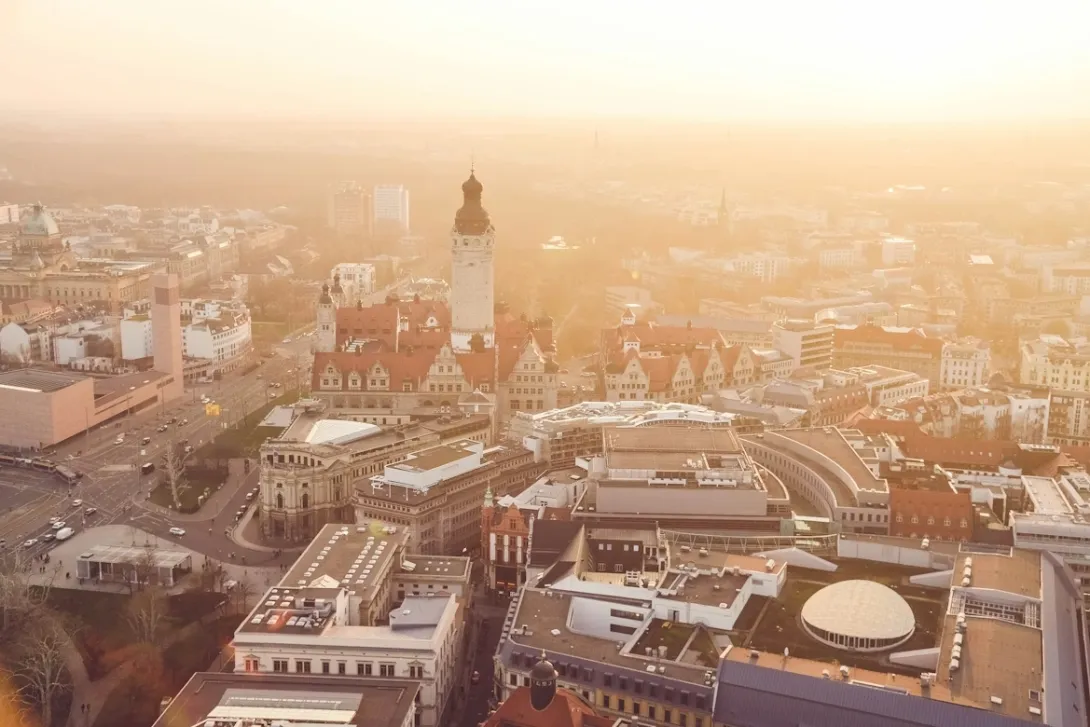
Introduction: The A9 Corridor
The road connecting Leipzig and Berlin follows a path shaped by glacial valleys from the last ice age, creating the relatively straight Bundesautobahn 9 (A9) highway that runs 190 kilometers between the two cities. This route was part of the Reichsautobahn system begun in the 1930s, with the Leipzig-Berlin section opening in 1936 as one of Germany's first long-distance motorways. Today, the A9 carries approximately 60,000 vehicles daily, making it one of Saxony's busiest transport arteries. The drive passes through the Fläming Heath region, characterized by sandy soils and pine forests that differ markedly from Leipzig's urban landscape and Berlin's metropolitan sprawl.
A Three-Day Exploration Plan
This Leipzig to Berlin itinerary 3 days allows thorough exploration while maintaining reasonable driving distances.
Day 1 begins in Leipzig with visits to the Monument to the Battle of the Nations (completed 1913), which commemorates the 1813 conflict against Napoleon. The Grassi Museum complex houses three museums covering applied arts, ethnography, and musical instruments. Drive 45 minutes to Bad Düben for overnight accommodation at Hotel & Gasthof Bad Dübener Schweiz, which offers rooms starting at €85 per night.
Day 2 involves a 40-minute drive to Lutherstadt Wittenberg. Allocate 3 hours for the Lutherhaus museum (entry €8) and Schlosskirche. After lunch at Brauhaus Wittenberg (traditional German dishes €12-18), drive 30 minutes to Niemegk. Stay at Landhotel Fläming, a countryside hotel with rooms from €75.
Day 3 includes a 45-minute drive to Potsdam. Purchase a day ticket for €19 that covers entry to Sanssouci Palace, the New Palace, and Cecilienhof. The Dutch Quarter's 134 brick buildings constructed between 1734-1742 provide photographic opportunities. The final 40-minute drive on the A115 brings you to Berlin's city center, where you can conclude your trip at Brandenburg Gate or continue exploring the capital.
Route Logistics and Practical Information
| Route Segment | Distance | Driving Time | Highway |
|---|---|---|---|
| Leipzig to Bad Düben | 45 km | 35 minutes | A14 then A9 |
| Bad Düben to Lutherstadt Wittenberg | 55 km | 40 minutes | A9 |
| Wittenberg to Niemegk | 40 km | 30 minutes | A9 |
| Niemegk to Potsdam | 50 km | 45 minutes | A9 then A10 |
| Potsdam to Berlin Mitte | 30 km | 40 minutes | A115 |
| Total Direct Drive | 190 km | 2 hours 10 minutes | A9 |
The most efficient route follows the A9 north from Leipzig, which becomes the E51 and E55 European routes. For those considering whether it's worth driving Leipzig to Berlin rather than taking the train, the road offers flexibility for stops that the 1-hour 15-minute ICE train connection cannot provide. Toll-free autobahns mean your only costs are fuel and potential parking fees. Note that the A9 between Leipzig and Berlin has variable speed limits, with some sections unrestricted and others limited to 120 km/h. Roadworks occur frequently, particularly around the Schkeuditzer Kreuz interchange near Leipzig, where the A9 meets the A14.
Recommended Places to Visit Along the Route
When planning how long to drive Leipzig to Berlin with stops, allocate at least 4-5 hours to visit these locations. Bad Düben, 45 kilometers north of Leipzig, features a 12th-century castle museum documenting regional history, with the Mulde River providing walking paths. The town's Kurpark offers thermal springs used since the 19th century. Continuing north, Lutherstadt Wittenberg demands attention for its UNESCO World Heritage sites connected to Martin Luther. The Schlosskirche (Castle Church) door displays the original Latin text of the Ninety-five Theses from 1517. Luther's residence at Augusteum contains personal artifacts including his writing desk. For practical advice on discovering similar locations, consider reading our guide on how to find the best stops and hidden gems between cities.
Niemegk, approximately halfway between Leipzig and Berlin, provides a convenient rest stop with its 13th-century St. Katharinen Church featuring Gothic architecture. The surrounding Fläming region offers cycling trails along the Flaeming Skate path, a 230-kilometer paved route popular with inline skaters. Potsdam, just southwest of Berlin, requires several hours to explore Sanssouci Palace, Frederick the Great's summer residence built between 1745-1747. The Chinese House in the palace gardens represents 18th-century European interpretations of Asian architecture. Cecilienhof Palace hosted the 1945 Potsdam Conference where Truman, Stalin, and Churchill met; the original conference room remains preserved.
Continue Your Adventure
Frequently Asked Questions
What are the best stops Leipzig to Berlin?
Key stops include Bad Düben for its castle and thermal springs, Lutherstadt Wittenberg for UNESCO World Heritage Reformation sites, Niemegk for Gothic architecture and cycling paths, and Potsdam for Prussian palaces like Sanssouci. Each offers distinct historical and cultural experiences within 30-45 minutes of the A9 highway.
How long to drive Leipzig to Berlin?
The direct drive on the A9 highway takes approximately 2 hours 10 minutes covering 190 kilometers without stops. With recommended stops at Bad Düben, Wittenberg, and Potsdam, the journey typically requires 4-5 hours of total driving time plus exploration time at each location.
Is it worth driving Leipzig to Berlin?
Driving provides advantages over the train for those wanting to visit intermediate locations. While the ICE train takes 1 hour 15 minutes directly, driving allows access to UNESCO sites in Wittenberg, Prussian palaces in Potsdam, and countryside areas like the Fläming region that rail travel cannot reach conveniently. The autobahn is toll-free with good infrastructure.
What are things to do between Leipzig and Berlin?
Activities include visiting the Lutherhaus museum in Wittenberg, exploring Sanssouci Palace in Potsdam, walking through Bad Düben's Kurpark thermal springs area, cycling the Flaeming Skate path near Niemegk, and photographing the Dutch Quarter's brick architecture in Potsdam. Each location offers specific historical, cultural, or recreational opportunities.