
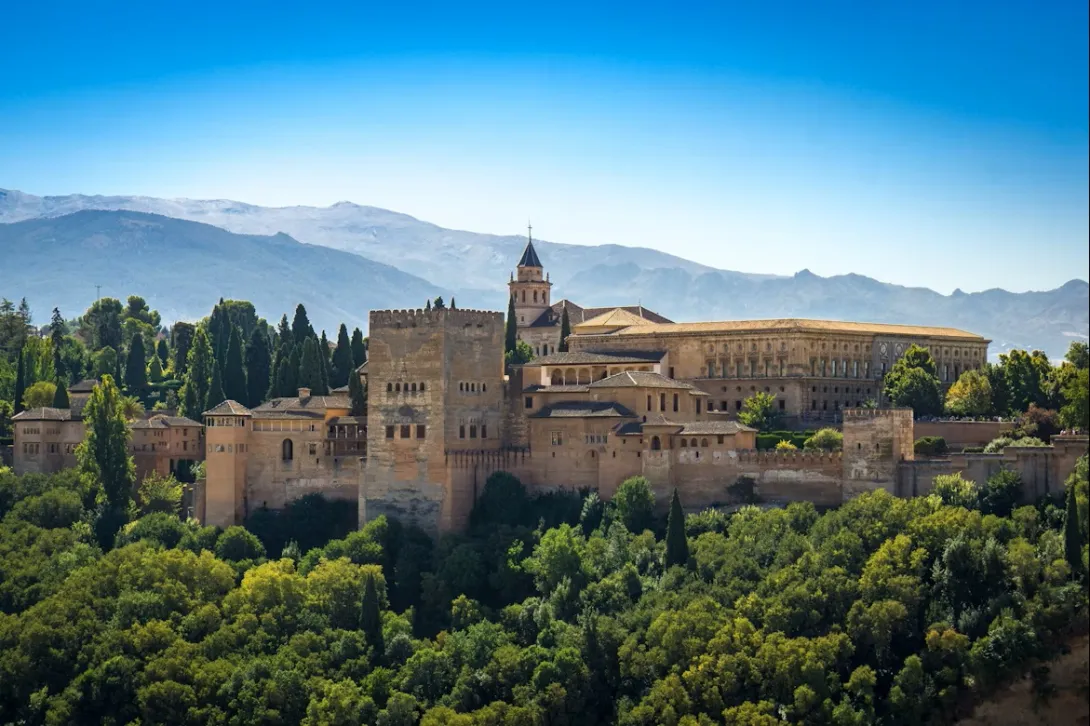
Stepping out of the lush, palace-crowned hills of Granada and heading toward the arid, volcanic shores of Almeria is more than just a drive; it is a transition between worlds. As you move from the Sierra Nevada's shadows into the sun-scorched plains of Andalusia, having a reliable road trip planner is essential to ensure you don't miss the surreal landscapes that lie hidden just off the A-92 highway.
In 2026, travel trends have shifted toward more meaningful exploration. Travelers no longer want the fastest route; they want the most storied one. This southern Spain itinerary takes you through the only true desert climate on the European continent, ancient subterranean neighborhoods, and coastal preserves that feel like the edge of the Earth.
Route Logistics: Fast Facts
| Feature | Details |
|---|---|
| Total Distance | ~170 km (105 miles) |
| Direct Driving Time | 1 hour 45 minutes |
| Recommended Duration | 8–10 hours for a full experience |
| Route Freshness | Verified for 2026 |
| Key Highlights | Cave dwellings, Desert film sets, Volcanic coastlines |
Who Is This Route For?
Before you start the engine, let’s see if this journey matches your travel style:
Film Fans: You’ll be walking through the sets of The Good, the Bad and the Ugly and Indiana Jones.
Photographers: From the white chimneys of Guadix to the volcanic needles of Cabo de Gata, the contrast is a dream.
Slow Travel Lovers: Perfect for those who enjoy finding the best stops between cities rather than rushing to the destination.
Offbeat Spain Explorers: Ideal if you want to see the "other" Andalusia, far from the crowds of Seville.
1. Guadix: The Subterranean Wonder
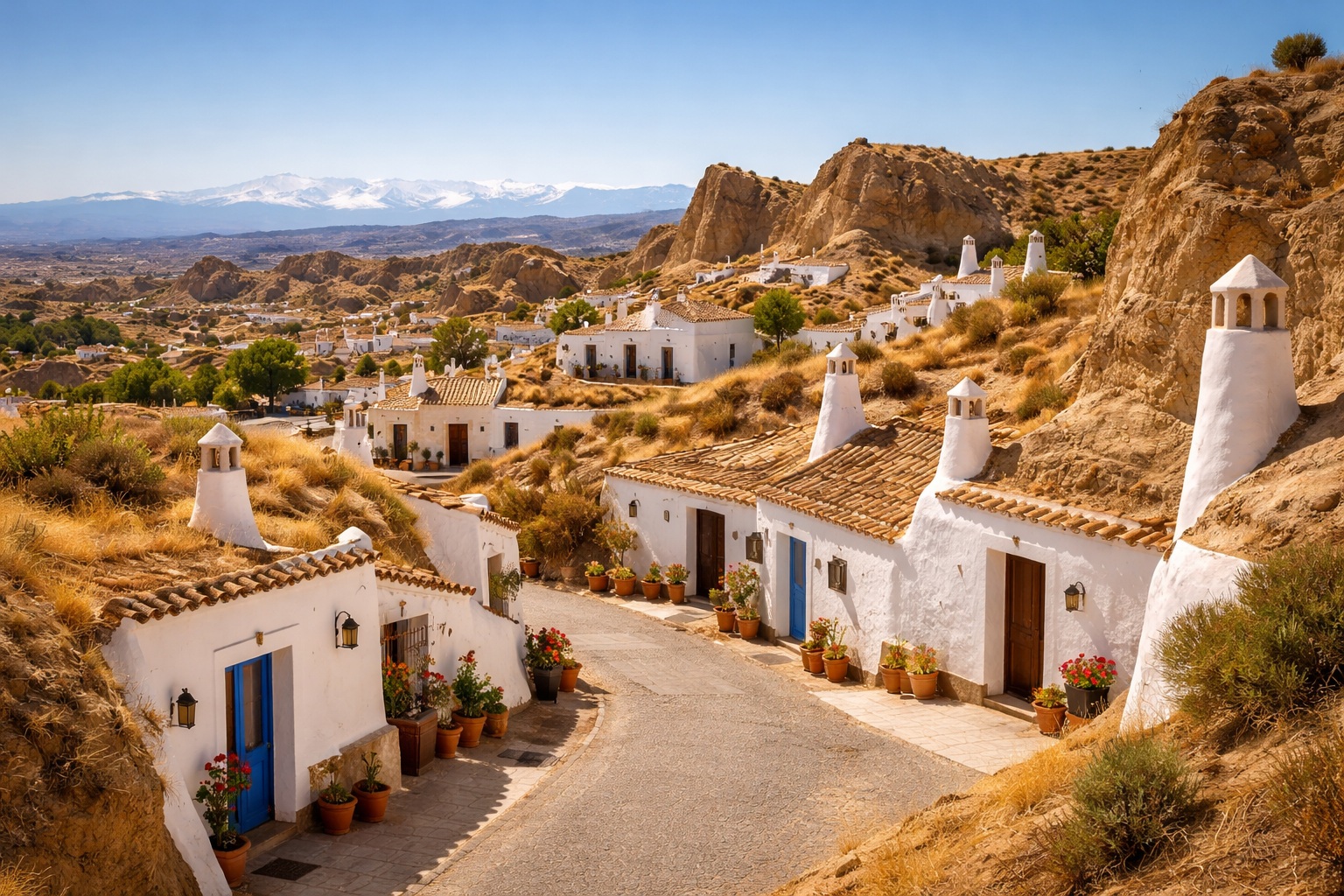
Located just 50km from Granada, Guadix is one of the most distinctive points on this Andalusia road trip. The city is world-famous for its Barrio de las Cuevas, where over 2,000 cave dwellings are carved into the soft clay hills.
The Experience: Walking through the cave district feels like entering a different dimension. These homes are naturally bioclimatic, maintaining a stable temperature of 18°C–20°C despite the outside heat. Visit the Centro de Interpretación Cuevas de Guadix to understand how these structures have evolved into modern homes.
Why it’s a Top Stop: It offers an authentic look at Andalusian heritage. Unlike the tourist-heavy caves in some parts of Granada, Guadix remains a living, breathing residential community.
Comparison Logic: While Granada’s Sacromonte is famous for Flamenco, Guadix is superior for those seeking architectural depth and a quieter, more local atmosphere.
Technical Data:
Opening Hours: 10:00 AM – 2:00 PM (Best for morning light).
Entrance Fee: Walking is free; Museum ~€3.00.
2. Tabernas Desert: Europe’s Only True Desert Climate
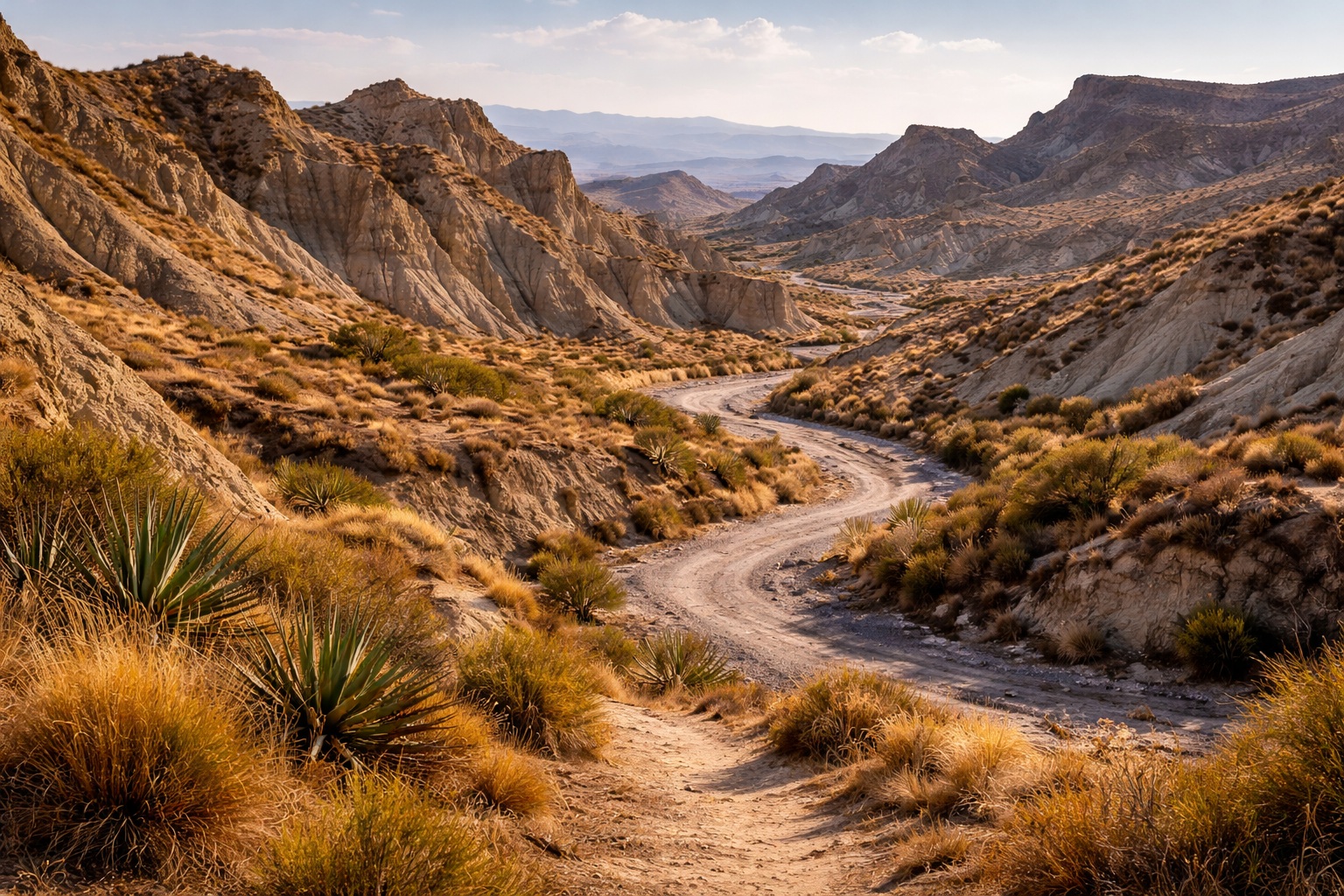
The Tabernas Desert is one of the most striking landscapes in Spain. As the only true desert climate on the European continent, it serves as a stark reminder of the region's diverse geology. This is a must-see for anyone interested in Spain scenic drives.
The Experience: The desert is a labyrinth of dry riverbeds (ramblas) and eroded ridges. For the best views, take the N-340a detour. This road winds through the heart of the "badlands," offering numerous pull-offs for photography.
Why it’s a Top Stop: It’s a piece of Hollywood history in Spain. The landscape is so reminiscent of the American West that it has hosted hundreds of international film productions.
Comparison Logic: Tabernas vs. Bardenas Reales: Tabernas is significantly more arid and rugged, offering a more "extreme" desert experience compared to the northern plains.
Technical Data:
Opening Hours: Public access 24/7.
Entrance Fee: Free.
Want to navigate like a local?
Use Wayro to sync your interests: filter stops by Abandoned, Atmospheric Villages, Local, Gastro, For kids, Experiences, Nature, or Culture/Museums.
3. Fort Bravo (Texas Hollywood): A Cinematic Time Machine
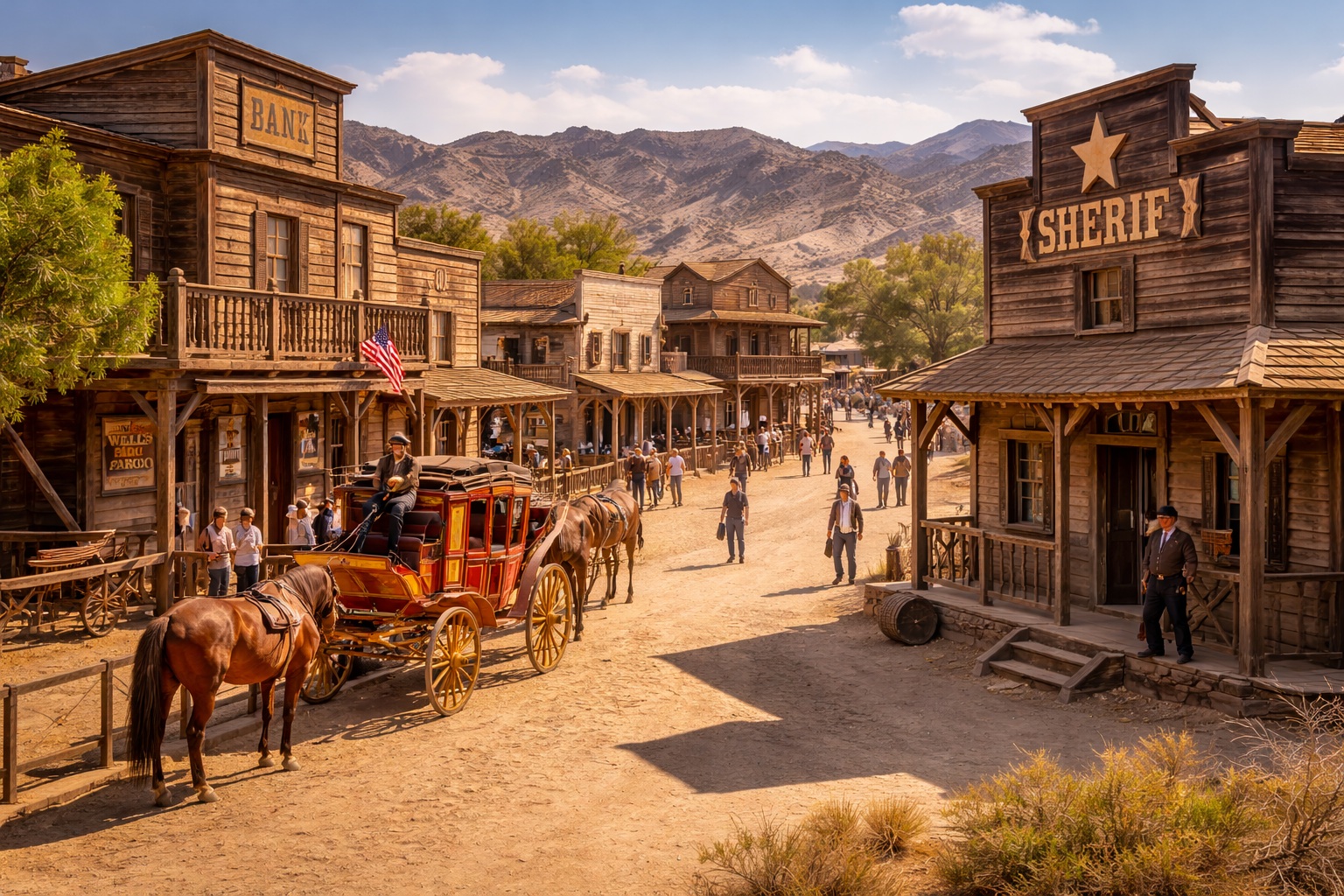
Nestled within the desert, Fort Bravo is a fascinating cultural attraction. Built in the 1960s, this set remains largely unchanged, offering visitors a chance to walk through a classic Western frontier town.
The Experience: You can watch live stunt shows featuring horses and "bank robberies," or explore the Mexican-style pueblo. It is an immersive way to make your road trip interesting for both adults and kids.
Why it’s a Top Stop: It is an active film set. Unlike a typical theme park, it feels raw and authentic, with the dust of the desert adding to the atmosphere.
Comparison Logic: Oasys MiniHollywood is more of a family resort with a zoo; Fort Bravo is the better choice for those who value cinematic history and a more "Wild West" feel.
Technical Data:
Opening Hours: 9:00 AM – 7:30 PM.
Entrance Fee: ~€19.50.
4. Cabo de Gata-Níjar: Volcanic Cliffs and Wild Beaches
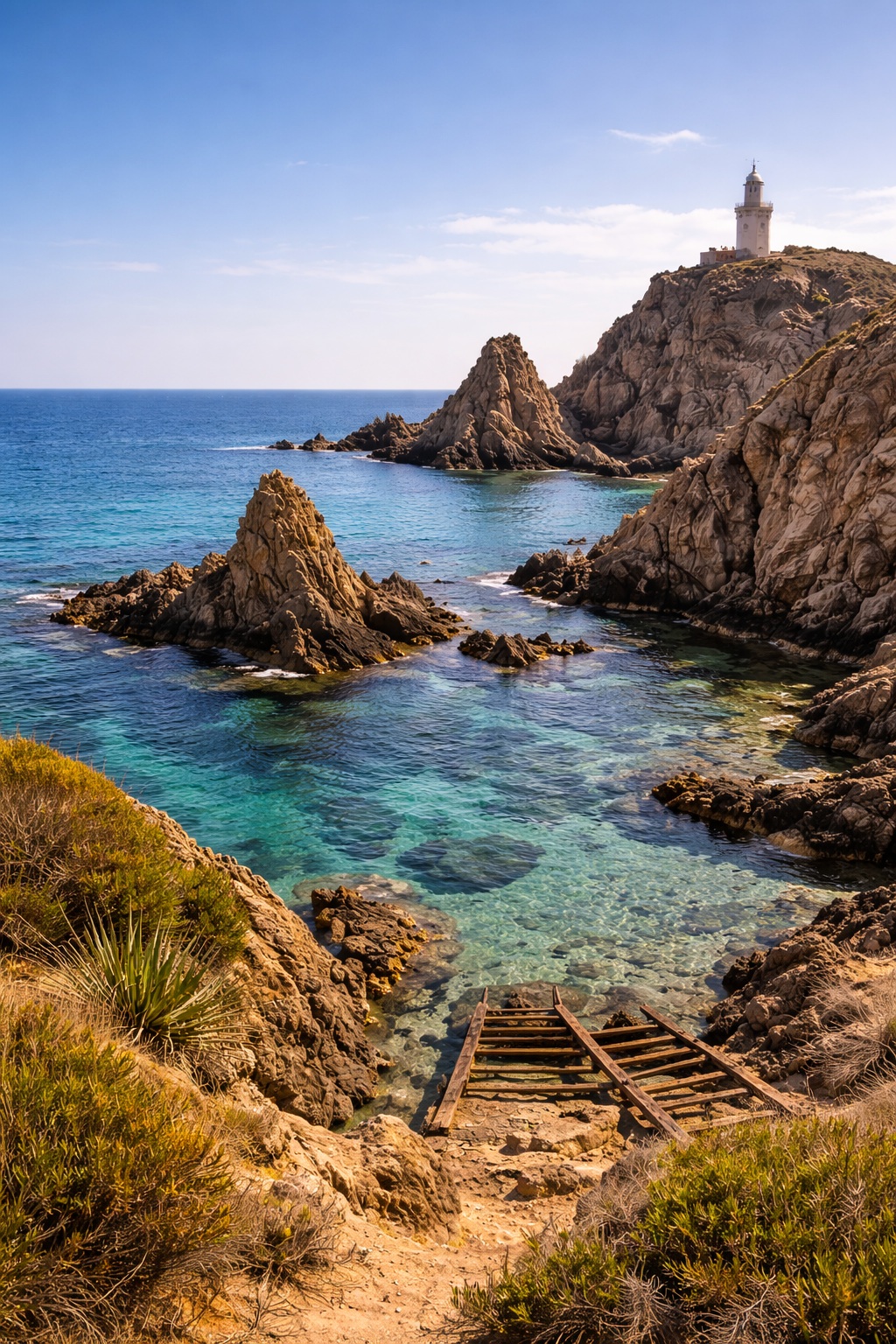
Your journey culminates at Cabo de Gata, a UNESCO Biosphere Reserve (since 1997) and one of the last undeveloped stretches of the Mediterranean.
The Experience: Drive to the Arrecife de las Sirenas to see volcanic rock formations rising from the sea. If you have time, hike down to Playa de los Genoveses — a beach that has seen no modern construction, preserving its untouched natural beauty.
Why it’s a Top Stop: It is the antithesis of the built-up Costa del Sol. It’s where you go to find peace, clear water, and dramatic sunsets at the lighthouse.
Comparison Logic: While the beaches near Almeria city are convenient, Cabo de Gata offers a wild, protected environment that is significantly more scenic and exclusive.
Technical Data:
Opening Hours: Public access 24/7.
Entrance Fee: Free.
5 Common Mistakes to Avoid on This Route
Ignoring the Gas Tank: Fuel up in Guadix. The stretches through the Tabernas Desert and Cabo de Gata have very few stations.
Skipping the Miradors: Don't just drive; stop at the "Mirador de la Magdalena" in Guadix for the best view of the cave chimneys.
Visiting at Midday: In summer, the desert is brutal. Plan your outdoor activities for early morning or late afternoon.
Staying on the A-92: The highway is fast, but the N-340a is where the beauty lies.
Forgetting Water: This is one of the driest regions in Europe. Always carry extra supplies.
Frequently Asked Questions
When is the best time of year for this road trip?
The ideal seasons are spring (April–June) or autumn (September–November). During these periods, temperatures in the Tabernas Desert are comfortable for exploration. In summer, temperatures often exceed 40°C, which can make outdoor activities hazardous.
How much time should I allocate for the drive?
While the direct driving time is under 2 hours, we recommend a full 8–10 hour day. This allows you to explore the cave dwellings of Guadix, visit the film sets in the desert, and catch the sunset at Cabo de Gata without rushing.
Are there any tolls on this route?
The main A-92 motorway connecting Granada and Almeria is toll-free. The scenic detours, such as the N-340a, are also free to use, though they require more cautious driving due to their winding nature.
Is it safe to drive through the Tabernas Desert?
Yes, the primary roads are well-maintained. However, travelers should be aware of strong winds and the total lack of shade. Always check your vehicle’s coolant levels and ensure you have plenty of water, as mobile signal can be inconsistent in the "badlands" canyons.
Can I complete this route using public transport?
While buses (ALSA) and trains run between Granada and Almeria, they provide direct transit without stops at the desert or coastal reserves. To experience the highlights of this guide, renting a car is the only practical option.
Continue Your Adventure
- Porto to Salamanca: Swap the high-speed highways for scenic riverside roads and charming towns. This route takes you through historic bridges, sun-drenched plazas, and quiet villages where traditional Portuguese and Spanish life unfolds. Perfect for history buffs and lovers of culinary surprises.
- Bilbao to San Sebastian: Escape the expressways and follow the Basque coastline, where rugged cliffs meet sandy beaches. Along the way, uncover lively pintxo bars, dramatic viewpoints, and quaint fishing villages that feel untouched by time. Ideal for slow travelers and photography enthusiasts.
- Munich to Salzburg: Venture beyond the autobahn and into the heart of Bavaria’s Alps. Emerald lakes, historic mountain towns, and panoramic viewpoints turn a short drive into a memorable alpine adventure. Perfect for nature lovers and fans of imperial history.