
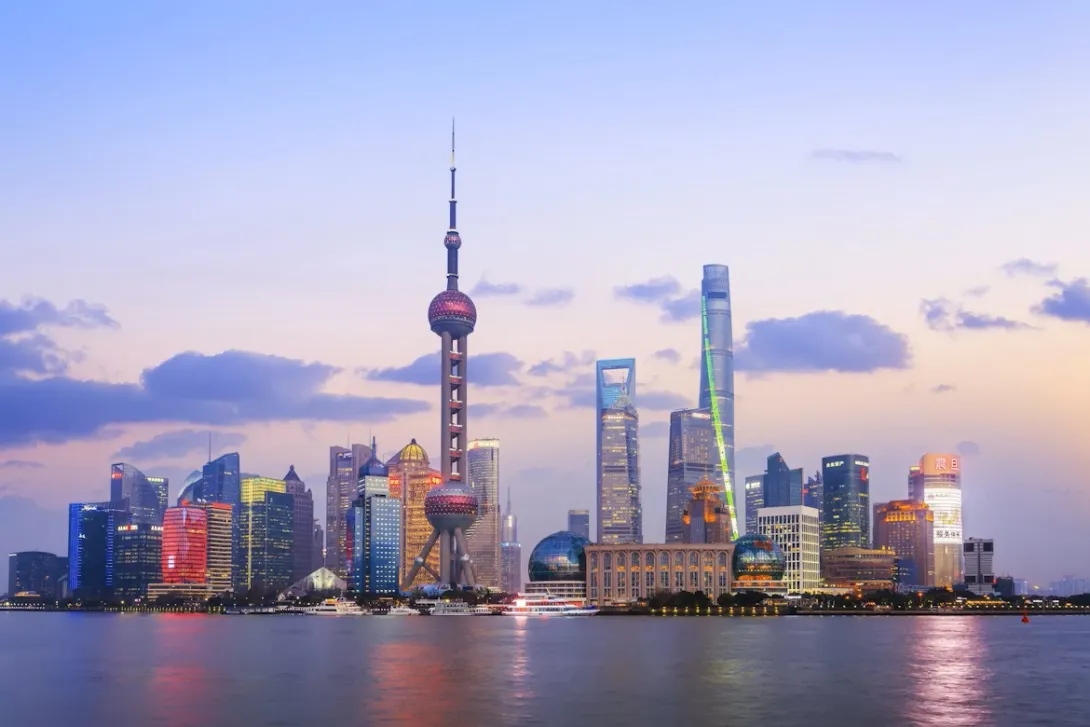
The drive from Shanghai to Hangzhou covers approximately 175 km and typically takes 2.5–3 hours via the G60 Expressway. For travelers in 2026, the route offers a mix of high-tech infrastructure and historic Jiangnan heritage. To drive legally, international visitors must obtain a temporary permit, as China does not recognize the IDP.
Can Foreigners Drive from Shanghai to Hangzhou in 2026?
Operating a vehicle in China has become more straightforward for international visitors in recent years. While an International Driving Permit (IDP) is not recognized, you can apply for a Provisional Driving Permit (临时驾驶证) at dedicated service windows in Shanghai Pudong (PVG) or Hongqiao (SHA) airports.
Requirements: In most major hubs, short-term visitors can apply without taking a written test. You will generally need your passport, your original home country license, and a certified Chinese translation.
The Process: The application often takes 30–60 minutes, depending on queue times. The permit is typically valid for up to 90 days for use with rental cars.
Procedures and documentation requirements may vary slightly between administration offices; it is advisable to check the latest updates from the Shanghai Traffic Authority upon arrival.
2026 Route Logistics: Distance, Time, and Tolls
| Route Metric | Estimated Data (2026) | Practical Driver Note |
|---|---|---|
| Total Distance | ~175 km (Direct) | Standard route follows the G60 Expressway. |
| Driving Time | 2.5 – 3 Hours | Can increase significantly during Friday evening rush. |
| Expressway Tolls | 85 – 105 CNY | Depending on specific entry/exit points and vehicle class. |
| EV Charging | Widely Available | Fast chargers are located at the majority of service areas. |
5 Curated Stops: Exploring the Jiangnan Heritage
To make the drive more than a commute, consider this sequence of stops. This route offers access to classic Jiangnan water towns and tea plantations while avoiding the heaviest tour bus flows.
1. Zhujiajiao: The Ancient Water Town (47 km from Shanghai)
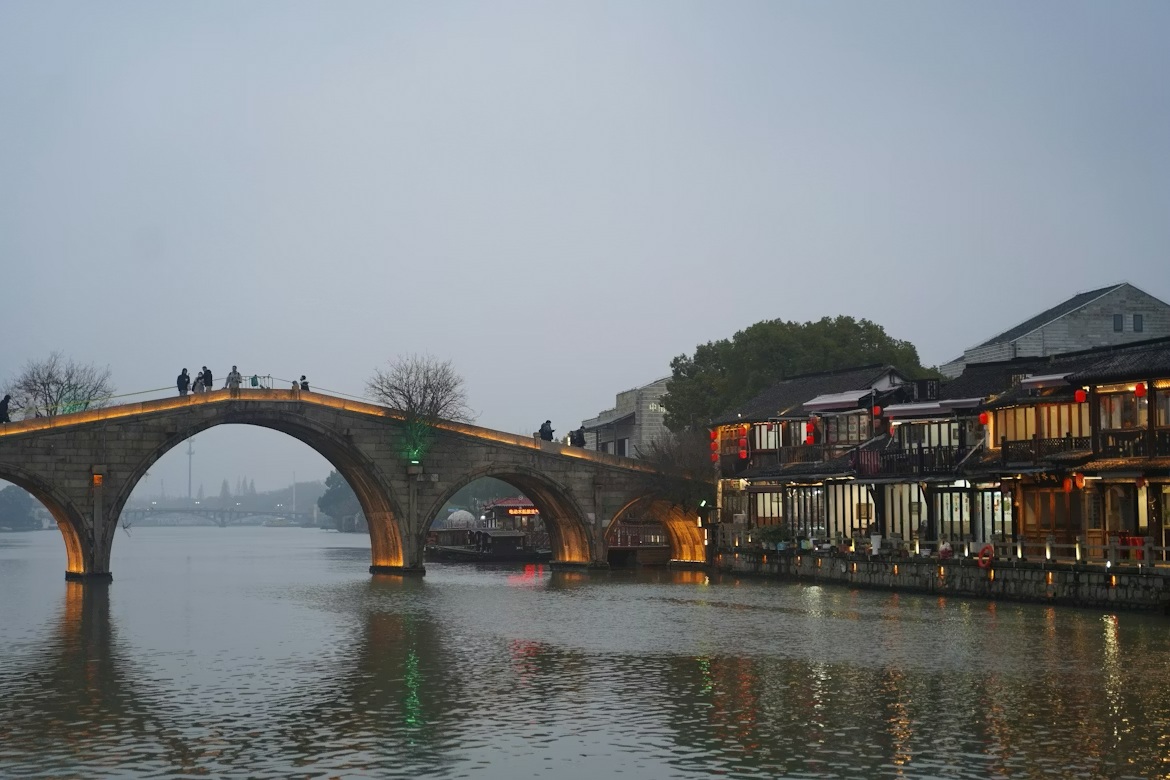
Zhujiajiao is one of the most accessible water towns in the region. Its 1,700-year history is visible in the 36 stone bridges and the well-preserved Ming-dynasty architecture along the canals.
The Value: Best visited early in the morning to see the local river life before day-trip crowds arrive.
Logistics: Parking is available at the North Gate for roughly 20 CNY. Entry to the town area is free, though specific historic sites require tickets.
2. Nanxun Ancient Town: The Silk Merchant Estates
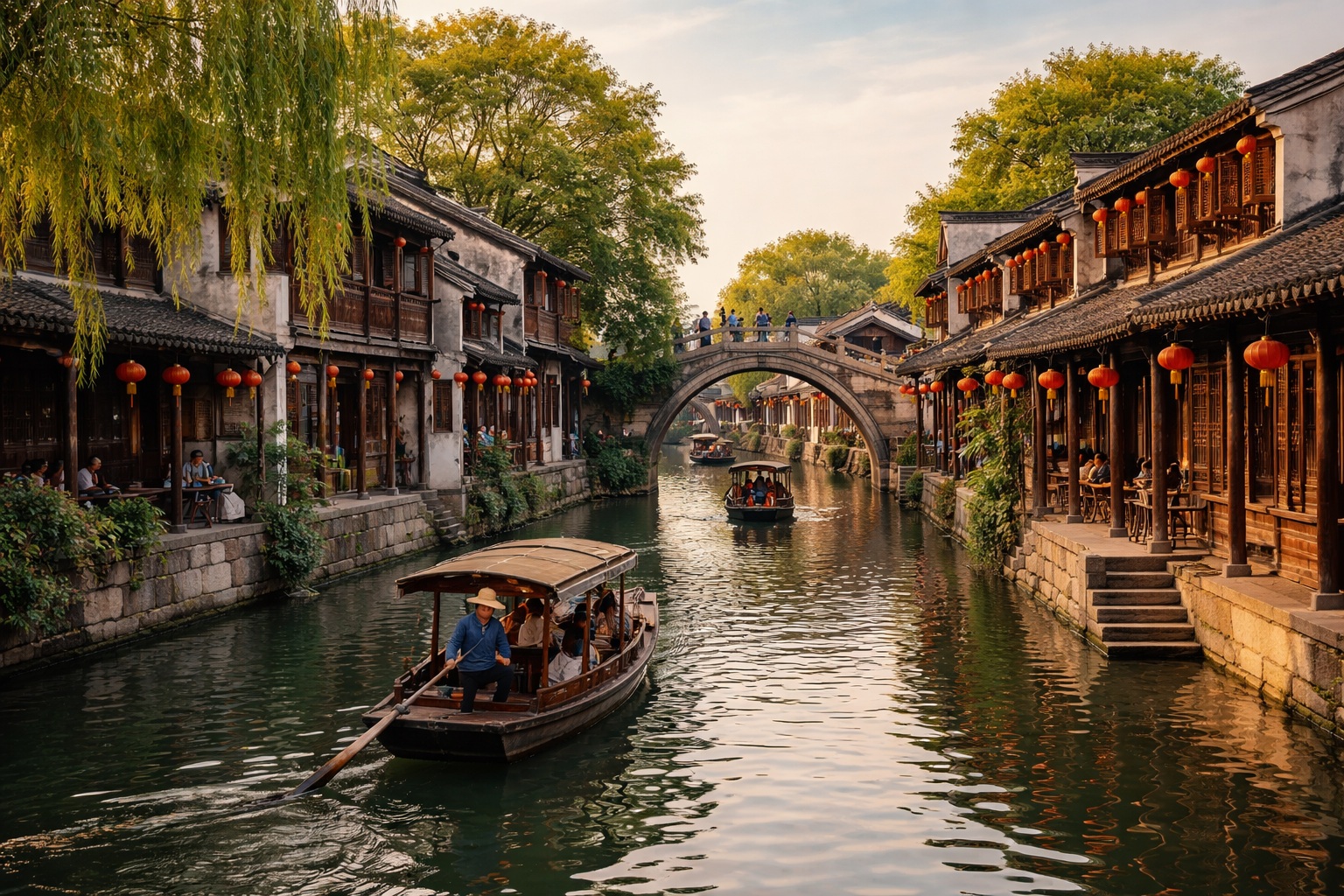
Nanxun offers a more authentic atmosphere compared to more commercialized towns. It is famous for its wealthy merchant estates, where traditional Chinese courtyards are often accented with 19th-century European architectural details.
The Value: Significantly quieter than Zhujiajiao, ideal for those interested in architectural history.
Logistics: Entrance fee is approximately 95 CNY. Underground parking is available near the South Entrance.
3. Huzhou Silk Museum: Industrial Heritage
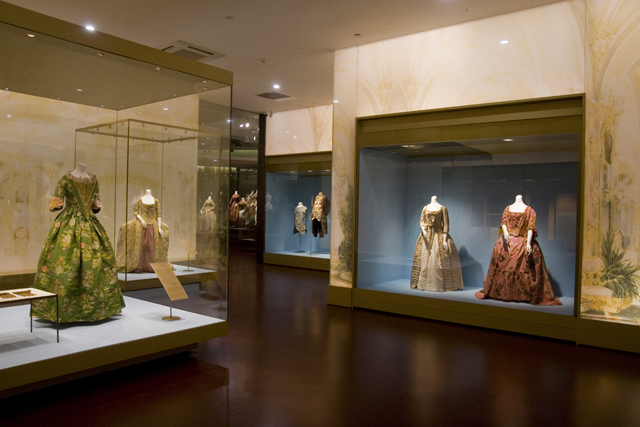
Huzhou is a historic center of silk production. The museum provides an interactive look at the region’s primary industry, from ancient weaving techniques to modern textile technology.
The Value: A practical midpoint stop with high-speed charging facilities often available in the vicinity.
Logistics: Free entry (passport required). Typically closed on Mondays.
4. Longjing Tea Villages: The Emerald Terraces
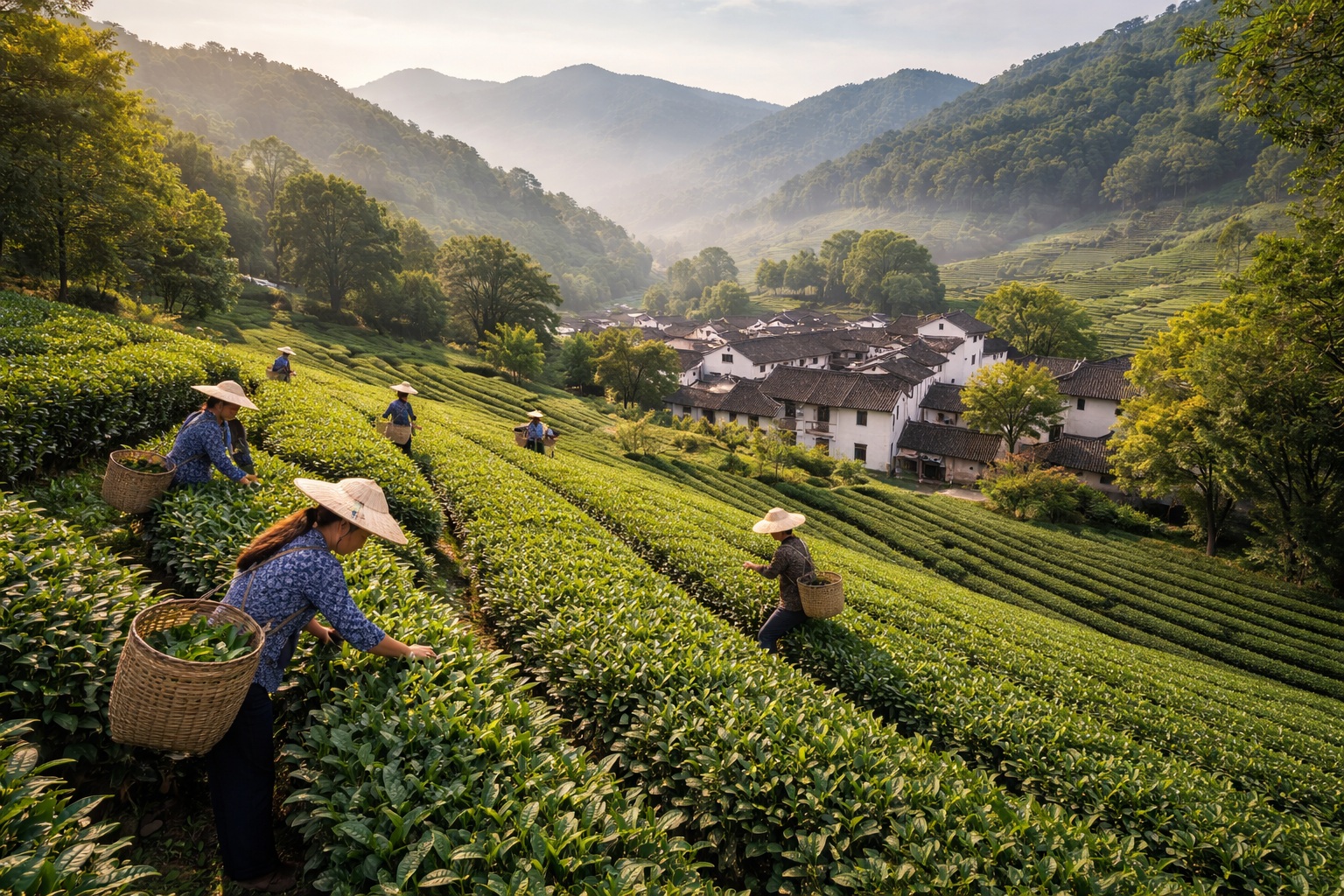
As you approach Hangzhou, the topography rises into the hills that produce Dragon Well (Longjing) tea. The terraced plantations offer some of the best outdoor scenery on the route.
The Value: Excellent for walking and photography. Some family-run plots allow visitors to observe the tea-firing process during harvest seasons.
Logistics: Roadways in the villages are narrow; use designated lots at the village perimeter.
5. Hangzhou Tea House: Gastronomic Finale
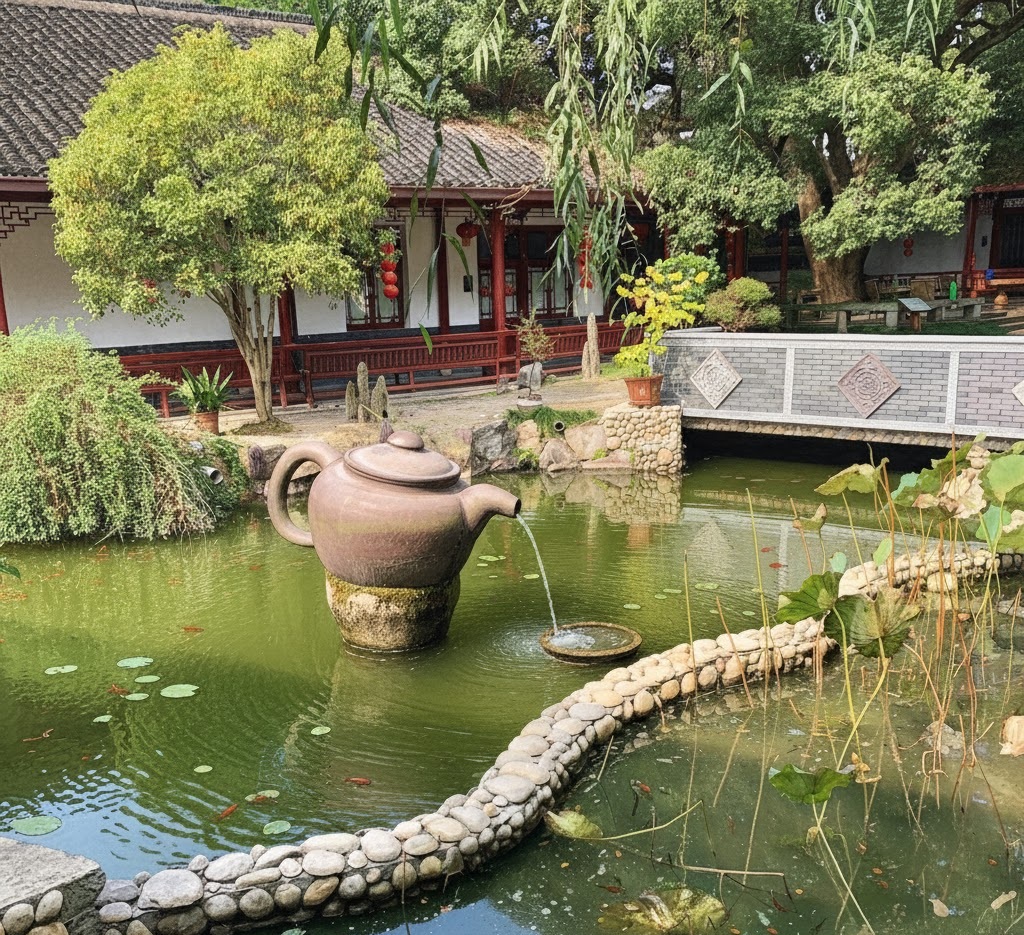
Concluding your journey with a formal tea tasting provides a refined look at local culture. Leading tea houses in the hills above West Lake offer seasonal pairings of fresh tea with regional pastries.
The Value: A quiet environment to decompress after the drive.
Price Range: Premium experiences typically range from 150 – 300 CNY per person.
2026 Navigation and Traffic Considerations
Plate Restrictions: Hangzhou periodically applies odd-even license plate restrictions in the West Lake area on weekends and holidays. Always verify current rules via local traffic apps before entering the scenic zone.
Smart Infrastructure: The G60 corridor is one of China’s most advanced highways. Some upgraded service areas now feature ultra-fast liquid-cooled chargers rated up to 600+ kW, allowing for rapid stops for EV drivers.
Summary FAQ: Drive from Shanghai to Hangzhou
How long is the drive from Shanghai to Hangzhou?
The drive covers approximately 175 km and takes 2.5–3 hours via the G60 Expressway, depending on traffic at the Shanghai and Hangzhou exit points.
Can foreigners drive from Shanghai to Hangzhou in 2026?
Yes. Tourists can apply for a Provisional Driving Permit at major hubs like Pudong Airport. While usually straightforward for short-term visitors, specific requirements for translations and medical forms may vary by location.
What are the toll costs for the Shanghai-Hangzhou route?
Expressway tolls for a standard passenger car range from 85 to 105 CNY, depending on the specific entry and exit points. Using a car with an ETC (Electronic Toll Collection) tag is recommended for convenience.
Are there EV charging stations on the G60?
Yes. The vast majority of service areas are now equipped with fast chargers. Select upgraded stations feature ultra-fast liquid-cooled chargers supporting the latest high-voltage vehicle architectures.
Continue Your Adventure
If you enjoyed this deep dive into the heritage of the Jiangnan region, you will find our other Asian route guides equally indispensable:
Bangkok to Chiang Mai: If you are looking for a comprehensive road trip planner for Southeast Asia, explore our Ultimate Scenic Route Planner.
Da Lat to Buon Ma Thuot: For those who prefer the road less traveled, our guide to the Best Stops in the Central Highlands is essential.