
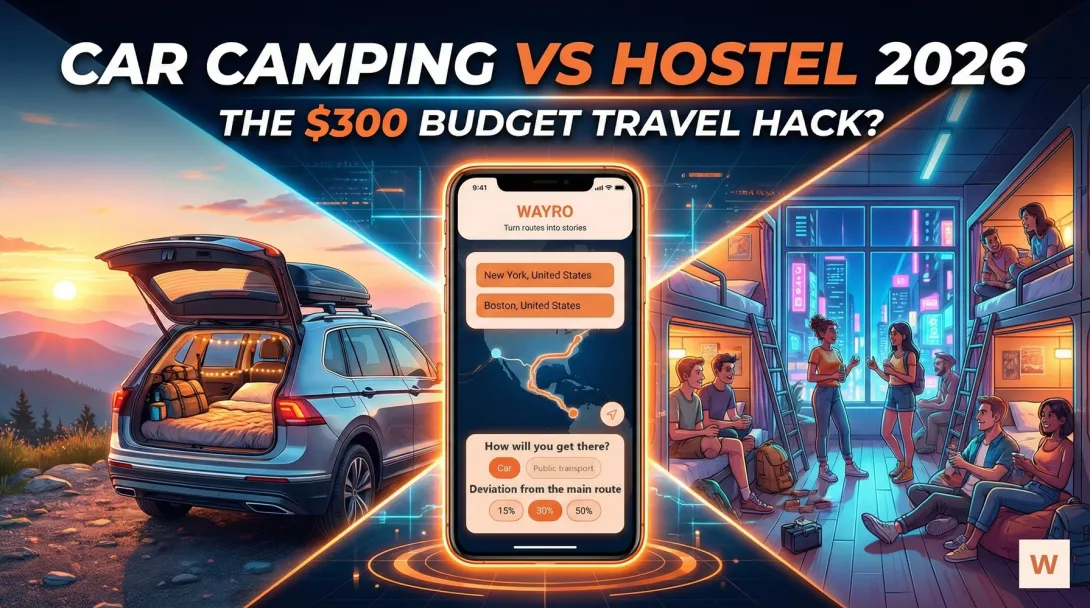
The landscape of student budget travel has reached a financial tipping point in 2026. According to recent hospitality trends on
This reality is driving a surge in cheap accommodation alternatives, with travelers opting for van life tips and car setups to travel without hotel costs. But is the transition to a vehicle truly a "hack," or does the lack of facilities break the budget? We’ve analyzed the data to provide a definitive road trip accommodation comparison.
1. Cost Breakdown: Is it Cheaper to Sleep in Your Car or Stay in Hostel for 3 Days?
Short Answer: Yes. In most high-traffic corridors, car camping remains 60–75% cheaper than hostel stays. While hostels offer social perks, they often trap travelers in a "spending loop" of expensive city dining and transit fees.
Comparative Budget (3-Day Average)
| Expense Category | Car Camping (SUV/Sedan) | Budget Hostel (Dorm) | 2026 Factor |
|---|---|---|---|
| Accommodation | $0 – $60 (Permits) | $195 – $285 | Includes 2026 city "green taxes" |
| Parking & Transit | $0 – $40 | $80 – $130 | Garage fees remain at historic highs |
| Food & Prep | $55 (Self-prep) | $125 (Dining out) | Hostels: Shared kitchen shortages |
| Hygiene/Showers | $25 (Gym pass/Truck stop) | Included | Gyms now offer "shower-only" apps |
| TOTAL | $80 – $165 | $400 – $540 | Total Savings: $320+ |
Methodology Note: Data based on 2026 pricing for the Pacific Coast Highway (US) and the Berlin-Prague corridor (EU). Estimates assume a mid-size vehicle and 1-2 travelers. Car camping costs include average permit fees.
2. Pros and Cons: Car Camping vs Hostel Stay
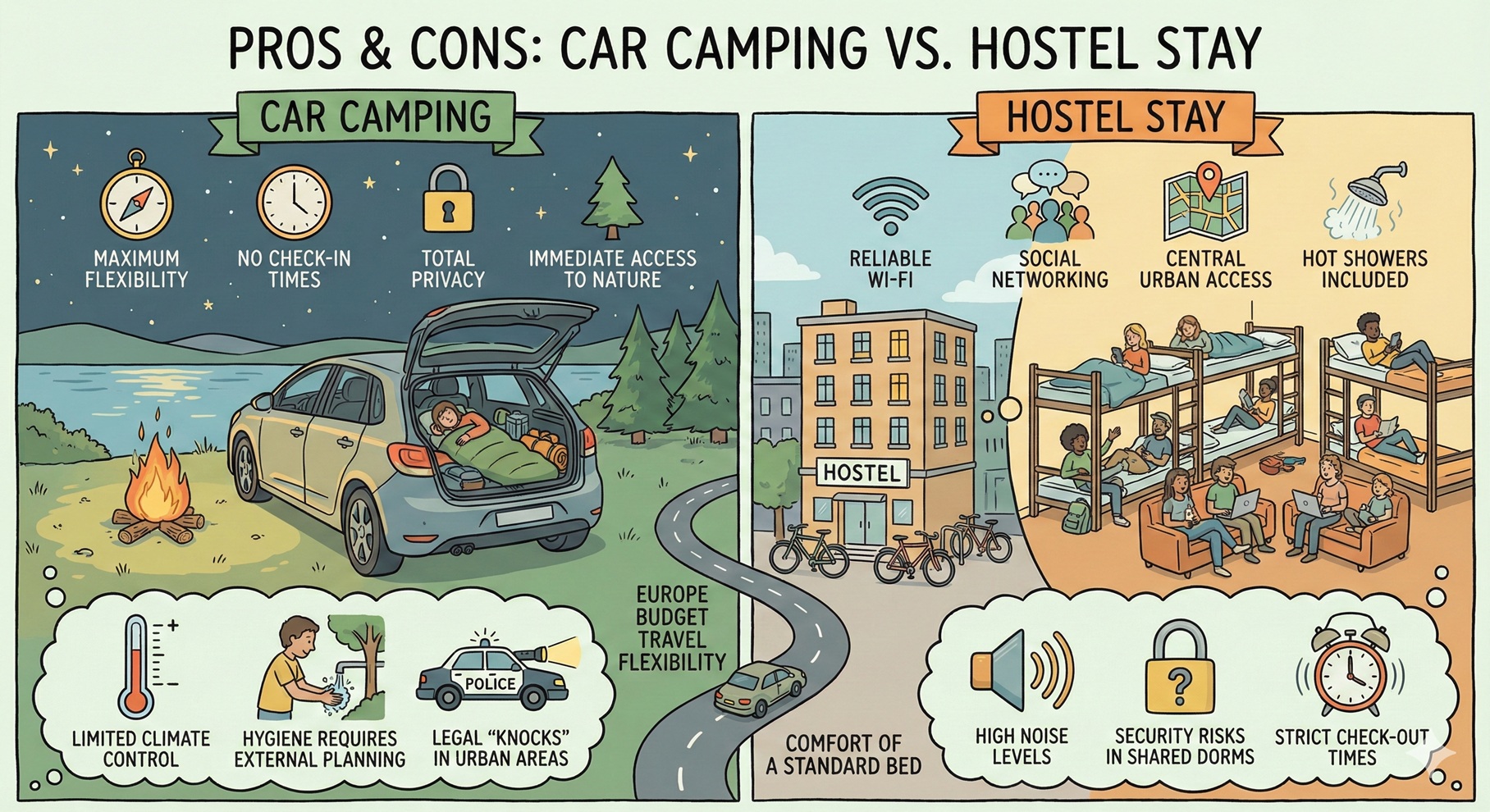
Choosing your road trip accommodation involves balancing Europe budget travel flexibility against the comfort of a standard bed.
Car Camping
Pros: Maximum flexibility; no check-in times; total privacy; immediate access to nature.
Cons: Limited climate control; hygiene requires external planning; legal "knocks" in urban areas.
Hostel Stay
Pros: Reliable Wi-Fi; social networking; central urban access; hot showers included.
Cons: High noise levels; security risks in shared dorms; strict check-out times.
3. Safe Places to Sleep in Your Car During Road Trip
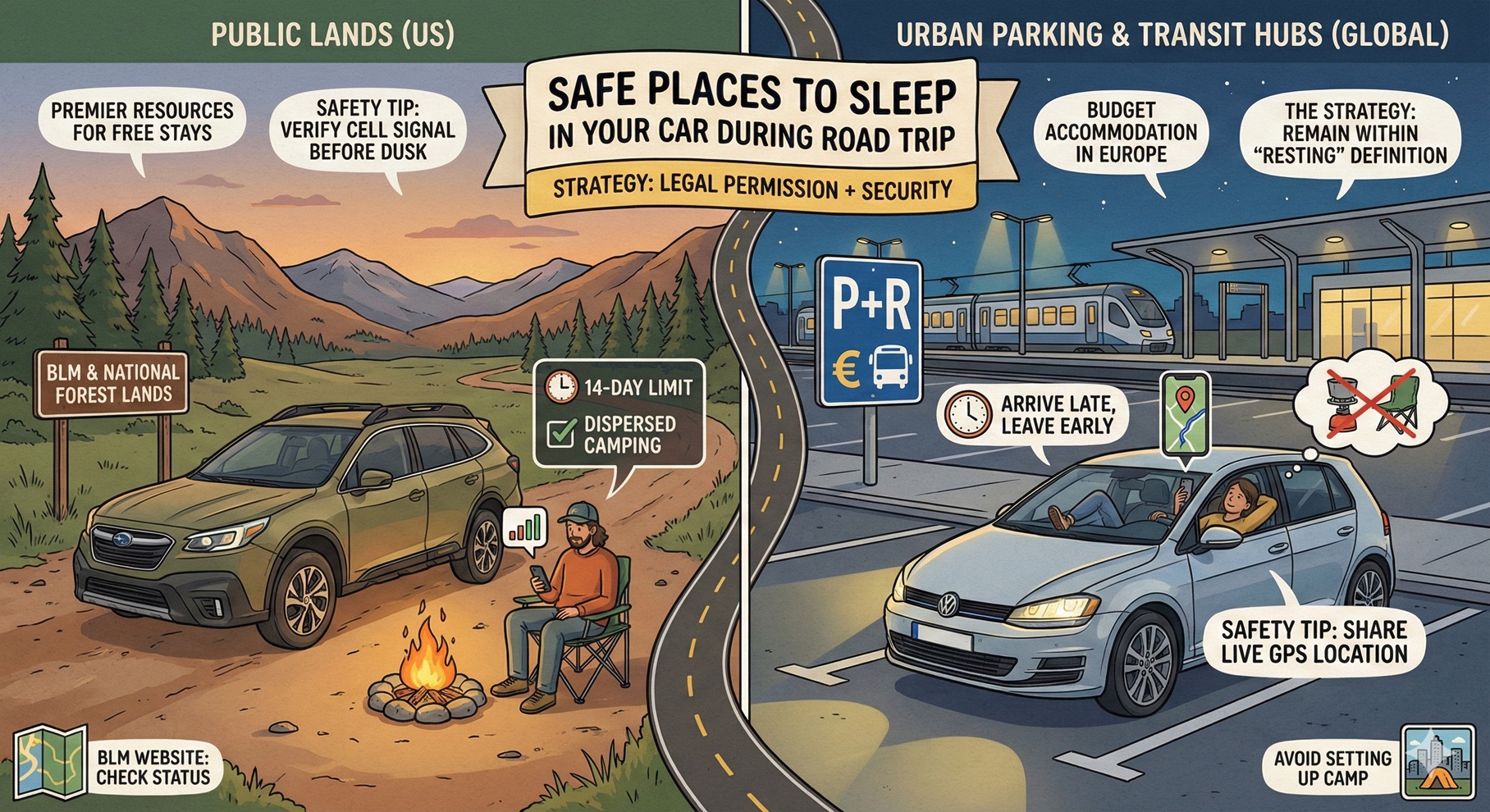
In 2026, safety is synonymous with "discretion." Finding safe places to sleep in your car requires a strategy that balances legal permission with security.
Public Lands (US)
BLM camping USA and
Safety Tip: Use digital mapping tools to verify cell signal before dusk.
Rules: Most BLM lands have a 14-day limit. Check the official
BLM website
Urban Parking & Transit Hubs (Global)
For those seeking budget accommodation in Europe, Park & Ride (P+R) lots are vital.
The Strategy: Arrive late, leave early. Avoid setting up "camp" (chairs/stoves) to remain within the legal definition of "resting."
Safety Tip: Share your live GPS location with a contact via your route-planning app.
4. Legal Realities: 2026 Regulations
Sleeping in car legal status is a complex patchwork. While rarely a criminal offense on first contact, municipal fines can be steep.
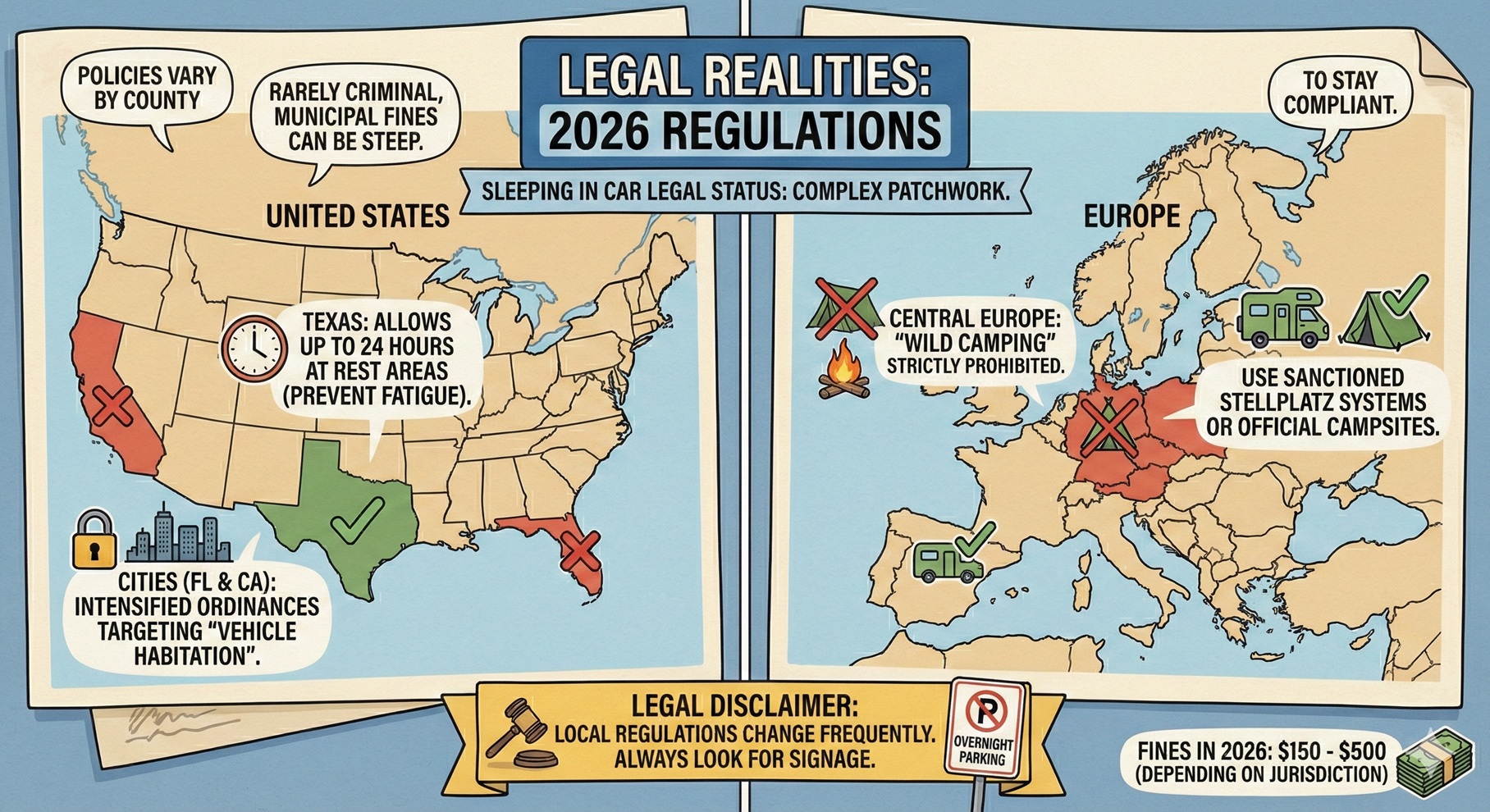
United States: Policies vary by county. Texas allows up to 24 hours at most rest areas to prevent driver fatigue. Conversely, cities in Florida and California have intensified ordinances targeting "vehicle habitation."
Europe: "Wild camping" is strictly prohibited in much of Central Europe. Use sanctioned Stellplatz systems or official campsites to stay compliant.
Legal Disclaimer: Local regulations change frequently. Always look for "No Overnight Parking" signage. Fines in 2026 can range from $150 to $500 depending on the jurisdiction.
5. How to Sleep in a Small Car Comfortably: One-Day Setup
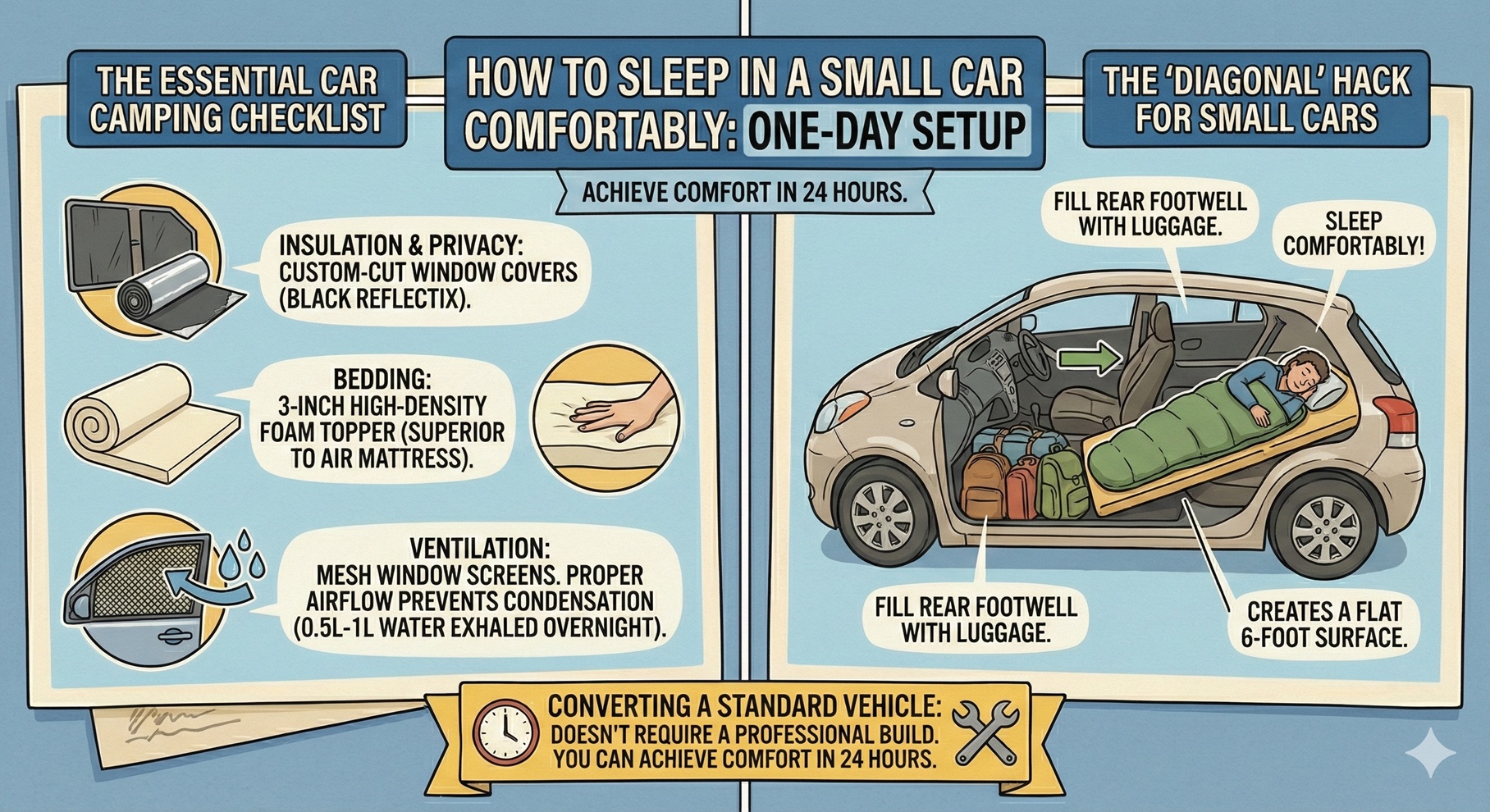
Converting a standard vehicle into a van life vs hostel contender doesn't require a professional build. You can achieve comfort in 24 hours.
The Essential Car Camping Checklist
Insulation & Privacy: Custom-cut window covers using Black Reflectix.
Bedding: A 3-inch high-density foam topper — far superior to air mattresses.
Ventilation: Mesh window screens. Proper airflow is required to prevent condensation; a single adult exhales roughly 0.5L–1L of water overnight.
The "Diagonal" Hack for Small Cars
The small car ‘diagonal’ hack involves moving the front passenger seat forward and filling the rear footwell with luggage to extend the sleeping platform. This creates a flat 6-foot surface, which is key to how to sleep in a small car comfortably.
6. Expert Safety: CO, Insurance, and Risk
For those choosing to travel without hotel rooms, safety must be proactive.
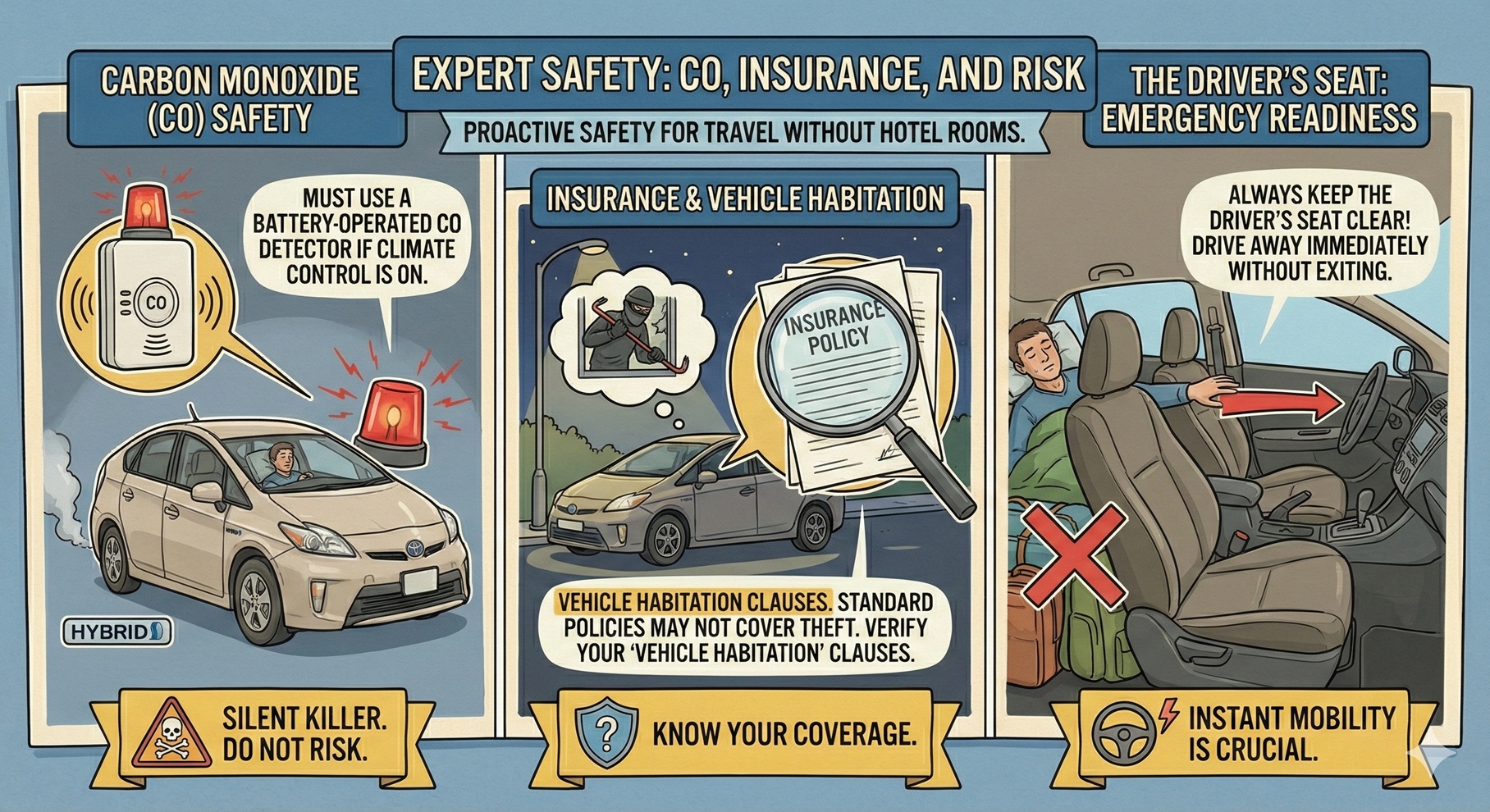
Carbon Monoxide (CO): If you use a hybrid vehicle (like a Prius) for climate control, you must use a battery-operated CO detector.
Insurance: Standard insurance may not cover theft while sleeping in a car. Verify your policy’s "vehicle habitation" clauses.
The Driver’s Seat: Always keep the driver's seat clear. In an emergency, you should be able to drive away immediately without exiting the vehicle.
7. The Wayro Hybrid Strategy: Best of Both Worlds
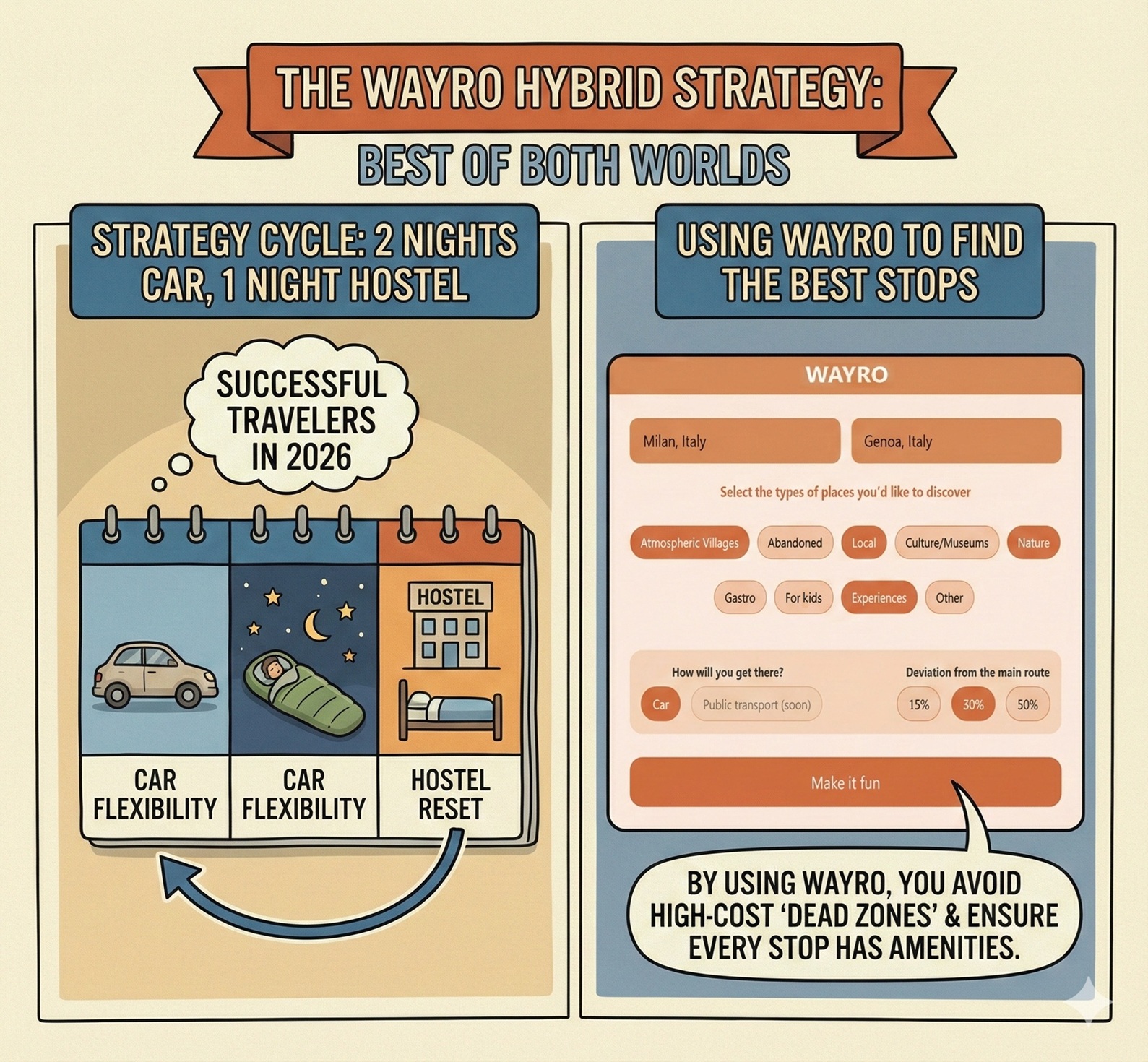
The most successful travelers in 2026 use a Hybrid Strategy: spending two nights in a car for flexibility and one night in a hostel to reset. To master this, you need to learn how to find the best stops between cities.
By using Wayro, you avoid the high-cost "dead zones" and ensure every stop has the amenities you need.
8. FAQ
Is it legal to sleep in your car in 2026?
It is generally legal at designated rest stops for fatigue management and on federal BLM/NPS lands. Urban street parking is subject to local municipal ordinances.
How much money can you save by car camping?
Travelers typically save $300+ over a 3-day trip by eliminating hostel fees, urban parking, and dining costs.
Is car camping safe for solo travelers?
Yes, provided you practice "stealth" principles, sleep in well-lit areas with activity (like 24-hour gyms), and use CO detectors.
We’re travelers just like you, and we’ve spent countless hours behind the wheel, which is why we created Wayro.