
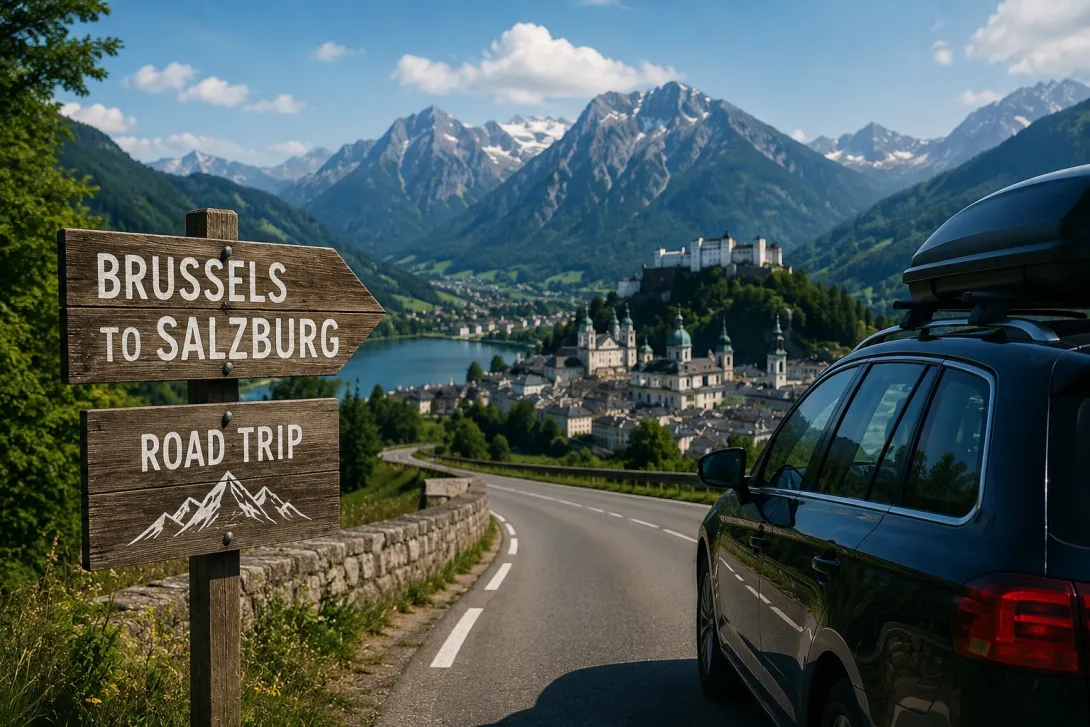
Embarking on a European Road Adventure
The journey from Brussels to Salzburg represents one of Europe's most rewarding road trips, connecting two culturally rich cities through a tapestry of landscapes, historic towns, and culinary delights. While the direct route covers approximately 850 kilometers (530 miles), the true value of this drive lies in the diverse regions it traverses: from Belgium's medieval heartland through Germany's industrial Ruhr Valley and Bavaria's pastoral beauty, culminating in Austria's Alpine majesty.
This guide provides comprehensive planning information, including how long to drive Brussels to Salzburg, whether it's worth driving Brussels to Salzburg, and detailed recommendations for things to do between Brussels and Salzburg. For those seeking to maximize their experience, understanding how to find the best stops and hidden gems between cities can transform a simple transit into an unforgettable journey.
Practical Route Information
| Route Segment | Distance | Driving Time (Direct) | Primary Highways |
|---|---|---|---|
| Brussels to Cologne | 210 km | 2 hours 15 minutes | E40, A4 |
| Cologne to Frankfurt | 190 km | 2 hours | A3 |
| Frankfurt to Nuremberg | 230 km | 2 hours 30 minutes | A3, A73 |
| Nuremberg to Munich | 170 km | 1 hour 45 minutes | A9 |
| Munich to Salzburg | 150 km | 1 hour 30 minutes | A8, A1 |
| Total Direct Route | 850 km | 9-10 hours | E40, A3, A9, A8 |
The most efficient route follows the E40 from Brussels to Cologne, then transitions to Germany's A3 autobahn through Frankfurt and Nuremberg, before taking the A9 south to Munich and finally the A8 into Austria. Tolls are minimal, with Austria requiring a vignette (toll sticker) for vehicles under 3.5 tons, available at border stations and gas stations. Road conditions are generally excellent throughout, with German autobahns offering sections without speed limits and Austrian highways maintaining 130 km/h maximums.
Border crossings between EU countries are typically seamless, though carrying passports is recommended. Fuel costs vary significantly, with Germany generally most expensive and Belgium offering competitive prices. For those considering whether it's worth driving Brussels to Salzburg, the flexibility to explore intermediate destinations and control over timing often outweighs the convenience of air travel.
Essential Intermediate Destinations
The best stops Brussels to Salzburg offer cultural, historical, and natural diversity. Cologne serves as an ideal first major stop, approximately 2.5 hours from Brussels. The city's UNESCO-listed Cologne Cathedral, completed in 1880 after six centuries of construction, dominates the Rhine skyline. The adjacent Roman-Germanic Museum houses artifacts from the city's Roman founding as Colonia Claudia Ara Agrippinensium. For lunch, traditional Brauhaus establishments like Früh am Dom serve Kölsch beer with regional specialties.
Continuing east, the Rhine Valley between Cologne and Mainz presents optional detours to castles like Marksburg, the only hill castle on the Rhine never destroyed. Frankfurt offers a contrasting modern financial hub with its reconstructed Altstadt (old town) and apple wine taverns in the Sachsenhausen district.
The Palmengarten botanical gardens provide respite from urban density. Würzburg, approximately 100 kilometers east of Frankfurt, features the UNESCO World Heritage Residence Palace, an 18th-century Baroque masterpiece with the world's largest fresco by Giovanni Battista Tiepolo. The Marienberg Fortress offers panoramic views of the Main River vineyards. Nuremberg combines medieval architecture with sobering 20th-century history at the Nazi Party Rally Grounds Documentation Center.
The Kaiserburg castle and Handwerkerhof craft district showcase traditional German craftsmanship. Approaching Salzburg, the Chiemsee region in Bavaria presents the Herrenchiemsee Palace, Ludwig II's unfinished Versailles replica on an island accessible by ferry. The surrounding Alpine foothills offer hiking trails with emerging views of the Salzburg Alps. Each of these destinations contributes distinct regional character to the journey, answering the question of things to do between Brussels and Salzburg with historical, culinary, and scenic variety.
Optimized Three-Day Travel Plan
A Brussels to Salzburg itinerary 3 days allows for meaningful exploration while maintaining reasonable driving durations.
Day 1 begins with departure from Brussels by 8:00 AM, reaching Cologne by 10:30 AM. Allocate three hours for cathedral visitation and lunch before continuing to Frankfurt (2 hours). After checking into accommodations, explore the Römerberg square and enjoy dinner at a traditional Apfelwein locale.
Day 2 starts with an early departure toward Würzburg (1.5 hours), dedicating the morning to the Residence Palace and fortress. After lunch featuring Franconian wine, proceed to Nuremberg (1 hour) for afternoon exploration of the castle and Altstadt. Overnight in Nuremberg allows for evening visits to historic beer cellars.
Day 3 involves the most scenic driving, departing Nuremberg for Munich (2 hours) with a potential stop at Ingolstadt's Audi Museum for automotive enthusiasts. In Munich, consider a brief visit to Marienplatz or the English Garden before the final 1.5-hour drive to Salzburg through increasingly dramatic Alpine landscapes.
Arrival in Salzburg by late afternoon permits initial orientation in the Altstadt. This schedule balances driving time (approximately 4-5 hours daily) with substantive destination experiences. Alternative routes could substitute Rothenburg ob der Tauber for Würzburg for enhanced medieval atmosphere, or include Regensburg's well-preserved Romanesque architecture. Accommodations should be booked in advance, particularly in popular destinations during summer and Christmas market seasons. The itinerary demonstrates that with strategic planning, the journey becomes as rewarding as the destinations.
Continue Your Adventure
- Vienna Antwerp Road Trip Best Stops Itinerary Driving Guide Road Trip Guide
- Munich to Salzburg Road Trip: 5 Best Stops & Scenic Alpine Route
- Harrogate to Sheffield Road Trip Guide: Hidden Gems & Scenic Drives
- Rome Belgrade Road Trip Guide Best Stops Itinerary Tips Road Trip Guide
- London Heidelberg Road Trip Best Stops 3 Day Itinerary Road Trip Guide
Frequently Asked Questions
How long does it take to drive from Brussels to Salzburg without stops?
The direct driving time from Brussels to Salzburg is approximately 9 to 10 hours, covering about 850 kilometers (530 miles) via the E40, A3, A9, and A8 highways. This assumes favorable traffic conditions and compliance with speed limits, though German autobahn sections without limits may reduce time slightly. Actual duration can vary due to construction, weather, and border formalities.
What are the most scenic alternatives to the direct highway route?
The Romantic Road (Romantische Straße) between Würzburg and Füssen offers a highly scenic alternative to autobahn travel, adding approximately 3-4 hours to the total journey. This route passes through medieval towns like Rothenburg ob der Tauber, Dinkelsbühl, and Nordlingen before reaching Neuschwanstein Castle. The Alpine Road (Deutsche Alpenstraße) from Lindau to Berchtesgaden provides another option for mountain scenery, though it significantly increases driving time.
Are there any border controls between Belgium, Germany, and Austria?
As all three countries participate in the Schengen Area, systematic border controls have been abolished. Occasional random checks may occur, particularly near the German-Austrian border for vignette compliance. All travelers should carry valid passports or national identity cards, as random document checks remain legally permissible. Austria requires a vignette (toll sticker) for vehicles using motorways, available at border stations, gas stations, and online.
What is the best time of year for this road trip?
Late spring (May-June) and early autumn (September-October) offer optimal conditions with mild temperatures, fewer tourists, and vibrant landscapes. Summer provides long daylight hours but encounters peak tourism and potential heatwaves. Winter travel requires preparation for snow, particularly in Alpine regions, but offers Christmas markets in most intermediate cities from late November through December.
Can this trip be completed in a weekend?
While possible, a weekend (2-3 days) requires either minimal stops or very long driving days. A more realistic approach involves focusing on one intermediate region, such as the Rhine Valley or Bavaria, rather than attempting the full route. For comprehensive exploration of multiple destinations, 4-5 days provides a more balanced experience without excessive driving.