
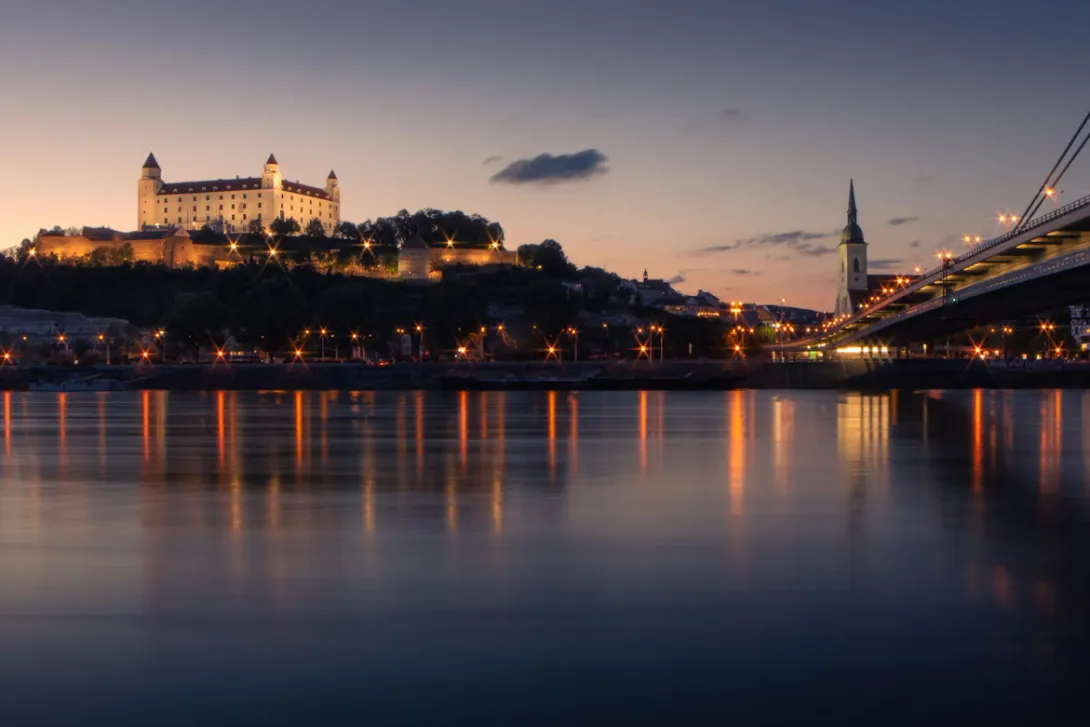
From Danube to Isar: A Central European Drive
The road from Bratislava to Munich follows ancient trade routes that connected the Kingdom of Hungary with Bavarian territories, with the first documented postal service between these points established in 1728. Today, this 450-kilometer journey crosses three distinct geographical zones: the flat Danube basin around Bratislava, the rolling hills of Lower Austria, and the foothills of the Bavarian Alps. The most direct route utilizes the D2 motorway in Slovakia, connecting to Austria's A6 and A1, then Germany's A8, with approximately 85% of the distance on limited-access highways. Drivers should note that Austrian vignettes are required for all motorways, while Germany's autobahns have no general toll for passenger cars. The route passes within 40 kilometers of both the Czech and Hungarian borders at various points, reflecting the complex political geography of this region.
A Three-Day Exploration Plan
This Bratislava to Munich itinerary 3 days allows thorough exploration while maintaining reasonable driving segments.
Day 1: Depart Bratislava mid-morning via the D2 and A6. Visit Schloss Hof (45 minutes from Bratislava), allocating 2 hours for palace and gardens. Continue to Melk (1 hour drive), touring the abbey complex. Overnight in Melk or nearby Krems, with dinner at a Heuriger (wine tavern) in the Wachau valley. Total driving: 2.5 hours.
Day 2: Drive to Linz (1 hour), visiting either Ars Electronica Center or the Lentos Kunstmuseum. After lunch, continue to Passau (1.5 hours), where the Inn, Ilz, and Danube rivers converge at the Dreiflüsseeck. Explore St. Stephen's Cathedral housing the world's largest cathedral organ. Overnight in Passau. Total driving: 2.5 hours.
Day 3: Cross into Germany, stopping at Burghausen (1 hour from Passau) with its 1,043-meter-long castle complex. Continue to Munich (1.5 hours), arriving mid-afternoon. This schedule provides balance between movement and exploration, with no day exceeding 3 hours driving time. Accommodations should be booked in advance, particularly during summer months and around Oktoberfest.
Recommended Intermediate Points
For those seeking things to do between Bratislava and Munich, several locations merit consideration. Hainburg an der Donau, 20 minutes from Bratislava, features well-preserved 13th-century town walls and the Braunsberg hill with panoramic Danube views. The Marchfeld region, northeast of Vienna, contains Schloss Hof, Empress Maria Theresa's 18th-century hunting palace with extensive gardens open year-round. Melk Abbey, approximately 90 minutes from Bratislava, occupies a dramatic cliffside position above the Danube; its library contains over 100,000 volumes, including 1,800 manuscripts from the 9th-15th centuries. Linz, Austria's third-largest city, offers the Ars Electronica Center focusing on digital arts and the Lentos Kunstmuseum with modern Austrian works. The Haus der Musik in Linz provides interactive sound exhibits in a historic building. For automotive enthusiasts, the BMW Group Plant in Dingolfing, 45 minutes from the Austrian border, offers weekday factory tours with advance booking. These represent some of the best stops Bratislava to Munich for travelers with varying interests.
Route Planning and Practical Information
| Segment | Highway | Distance | Driving Time | Notes |
|---|---|---|---|---|
| Bratislava to Austrian border | D2 | 15 km | 15 minutes | Slovak highway requires toll sticker |
| Border to Vienna outskirts | A6 | 45 km | 30 minutes | Austrian vignette required |
| Vienna to Linz | A1 | 185 km | 1 hour 45 minutes | Rest areas every 30-40 km |
| Linz to German border | A8 | 95 km | 1 hour | Passes through Alpine foothills |
| Border to Munich | A94/A99 | 110 km | 1 hour 15 minutes | Munich ring road can be congested |
| Total Direct Route | D2/A6/A1/A8 | 450 km | 4 hours 45 minutes | Without stops or traffic delays |
For those wondering how long to drive Bratislava to Munich, the answer depends heavily on traffic conditions and route choices. The theoretical minimum of under 5 hours assumes no stops, light traffic, and adherence to speed limits. Realistically, with moderate traffic and a brief rest stop, plan for 5.5 to 6 hours. Weekend afternoons often see heavier traffic approaching Munich, particularly on the A8 from the east. An alternative scenic route adds approximately 90 minutes but follows the Danube more closely via Passau. When considering is it worth driving Bratislava to Munich versus train or flight, the road trip offers flexibility to explore intermediate points that rail connections bypass. Fuel costs average €65-80 for a standard gasoline vehicle, with diesel approximately 15% less. Remember that our article on how to find the best stops and hidden gems between cities provides additional strategies for planning detours.
Continue Your Adventure
Frequently Asked Questions
What is the driving distance and time from Bratislava to Munich?
The direct route covers approximately 450 kilometers (280 miles). Under ideal conditions with no stops, the drive takes about 4 hours 45 minutes. Realistically, with traffic and a brief rest, plan for 5.5 to 6 hours.
Are there tolls on the Bratislava to Munich route?
Yes. Slovakia requires a toll sticker (emyto) for the D2 motorway. Austria mandates a vignette for all motorways (A6, A1, A8). Germany's autobahns have no general toll for passenger cars, though some specific tunnels and bridges may charge fees.
What are the main highways between Bratislava and Munich?
The primary route uses Slovakia's D2, Austria's A6 and A1, and Germany's A8. Alternative scenic routes may incorporate secondary roads like the B12 in Bavaria or follow the Danube more closely via Passau.
Can this trip be done in one day with sightseeing?
While possible, a single day allows only brief stops. For meaningful exploration of intermediate points like Melk Abbey or Linz, a minimum of two days is recommended. Three days provides optimal balance between driving and visiting attractions.
What documents do I need for this cross-border drive?
A valid driver's license, vehicle registration, proof of insurance (Green Card), and passport or national ID card for border crossings. Rental cars typically require specific cross-border permission. Winter driving may necessitate snow chains in alpine areas.