
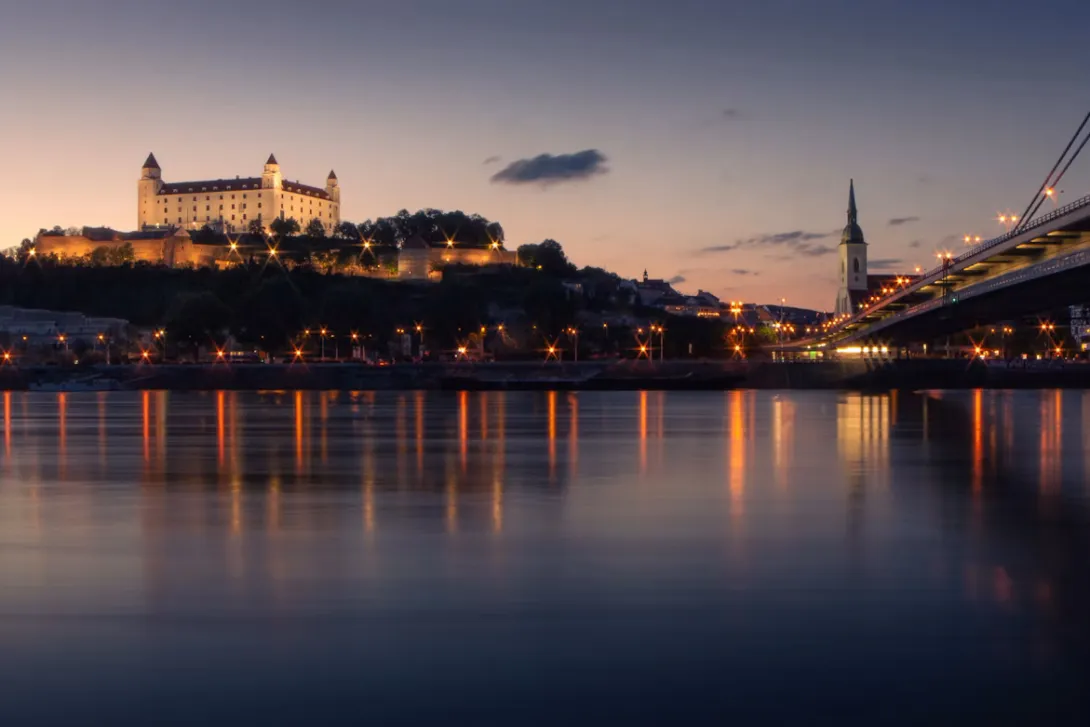
The Danube Corridor Connection
The 200-kilometer stretch between Bratislava and Budapest follows the Danube River's ancient trade route, a path used by Roman legions, medieval merchants, and now modern travelers on the E75 highway. This road trip connects two capital cities that were once part of the same kingdom for centuries, with the Slovak-Hungarian border crossing at Rajka serving as the modern division point. The drive reveals how Central European geography shapes both landscape and culture, with the Little Hungarian Plain unfolding between the Carpathian foothills and the river's broad curve. For those planning this route, understanding the practical aspects of cross-border travel is essential, including the need for a vignette on Slovak highways and proper documentation at the border. The journey offers more than efficient transit between capitals; it provides insight into regional connections that predate modern nation-states. Those interested in maximizing their experience should consider how to find the best stops and hidden gems between cities to enhance their travel planning.
Route Planning and Practical Details
| Segment | Route | Distance | Time | Notes |
|---|---|---|---|---|
| Bratislava to Rajka border | D2/E65/E75 | ~25 km | ~25 min | Slovak e-vignette required |
| Border Crossing | Rajka border | N/A | 5-30 min | Schengen Area, minimal checks |
| Border to Győr | M15/M1/E75 | 59 km | 40 min | Hungarian e-vignette required |
| Győr to Budapest | M1 then M0 | 120 km | 1 hr 20 min | Follow signs for Budapest center |
| Total Direct Drive | E75/M1 | ~205 km | ~2.5–3 hours | Without stops |
The most efficient route follows the E75 highway (designated M1 in Hungary, D2 in Slovakia), a well-maintained motorway with regular service areas. Drivers need a Slovak electronic vignette for the motorway section before reaching Hungary. Buy it through the official Slovak e-vignette system or at an authorized point of sale before using the tolled motorway. Fuel prices can vary between Slovakia and Hungary, so it is worth comparing current prices before crossing the border. Fueling up in Bratislava may be convenient if local prices are favorable. Border formalities are minimal within the Schengen Area, though passports or national ID cards should be carried. Road conditions are generally good, although winter weather can bring snow and ice. In Slovakia, winter tyres are mandatory for cars when the road is covered with snow, ice, or frost, so check conditions before setting out in winter. The route includes multiple rest stops with facilities, including the Shell station at Rajka immediately after the border and the M1 Pihenőpark near Győr with dining options.
Recommended Route Detours and Attractions
For those asking about things to do between Bratislava and Budapest, several worthwhile detours exist. Near Čunovo, just south of Bratislava, the Danubiana Meulensteen Art Museum occupies a peninsula in the Danube and presents contemporary art in a striking modern building. Continuing south, the town of Mosonmagyaróvár features a historic castle and museum complex, reached from the M1 via Exit 160. The city of Győr, accessible from the M1 via Exit 123, offers Baroque architecture in its historic center, specifically Széchenyi Square with its Town Hall and Carmelite Church, requiring about 90 minutes to explore properly. North of Budapest, the artists' town of Szentendre lies about 20 kilometers from central Budapest, with a Mediterranean-style old town and the open-air Skanzen ethnographic museum representing traditional Hungarian village life. Each location provides distinct regional character without requiring extensive time off the primary route.
A Three-Day Exploration Schedule
This three-day Bratislava to Budapest itinerary balances sightseeing with manageable driving distances.
Day 1 begins in Bratislava with visits to Bratislava Castle and the Old Town Hall, followed by a drive of about 65 km to Győr. Overnight in Győr allows time to explore its Baroque historic center in the evening.
Day 2 includes Győr's Bishop's Castle and a detour to the Pannonhalma Archabbey, about 20–22 km south of Győr. After visiting the UNESCO World Heritage site, continue toward Szentendre, allowing roughly two hours for the drive depending on the route and traffic. Spend the afternoon exploring Szentendre's galleries, historic streets, and the Skanzen open-air ethnographic museum, then stay overnight in or near the town.
Day 3 covers the final roughly 20–25 km to Budapest, leaving the rest of the day for the Hungarian capital's Parliament building, Castle District, and thermal baths. This schedule turns a short intercity drive into a three-day Central European road trip with time for several meaningful stops.
Continue Your Adventure
Frequently Asked Questions
How long to drive Bratislava to Budapest?
The direct drive from Bratislava to Budapest is roughly 200–205 km and typically takes about 2.5–3 hours in normal traffic, without extended stops. Travel time can be longer with congestion or delays. For a direct drive with a short fuel or rest stop, allow around 3–3.5 hours. Longer detours, such as Pannonhalma or Szentendre, can add several hours to the journey.
What are the best stops Bratislava to Budapest?
Primary stops include Győr for its Baroque historic center and Pannonhalma Archabbey as a cultural detour. Szentendre is a good choice near Budapest for its galleries, historic streets, and Skanzen open-air ethnographic museum. Near Bratislava, the Danubiana Meulensteen Art Museum in Čunovo offers contemporary art in a distinctive riverside setting.
Is it worth driving Bratislava to Budapest?
Driving offers flexibility to visit intermediate locations like Győr and Szentendre that train travel bypasses. The road conditions are excellent, border formalities minimal, and the ability to control your schedule makes driving advantageous for those wanting to explore beyond the two capitals.